Brussels: City Card with STIB Public Transportation
Get access to some of the best museums and tourist attractions with this Brussels City Card. Enjoy exclusive discounts on tours and at partner shops, bars and restaurants.
From 50,00 €
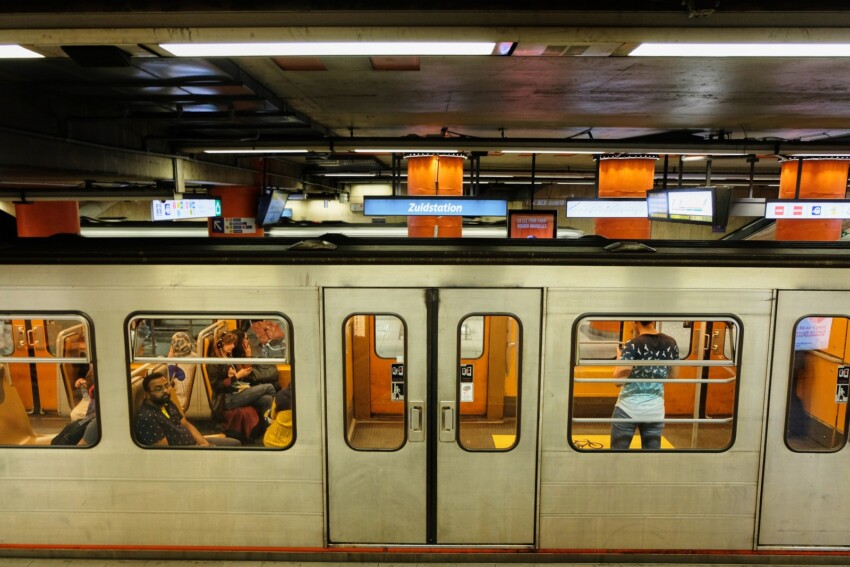
Brussels city centre is easily walkable, yet during your stay you’ll need the metro to reach some of the city’s top attractions such as the Atomium or other points of interest just outside the centre.
Opened in the 1970s, Brussels Metro is relatively young compared to other European capital metros. Currently, it’s the transport choice for 38% of passengers using Brussels’s public transport.
The Brussels Metro network is run by the public transport company STIB and comprises four lines totalling around 40 kilometres—far less than London’s 400-plus kilometres, but for tourists’ needs, the metro proves a fast and efficient way to get around the city. Keep this in mind if you spot a good deal on a hotel outside the centre.
Single ticket prices aren’t cheap, though they’re lower than those in other major cities. With tourist cards and passes, you can ensure the metro barely dents your holiday budget.
Brussels Metro has four lines, complemented by premetro lines—specialised trams that run largely on underground tracks.
Many websites and guides don’t distinguish between traditional metro and premetro, which makes sense since the difference is purely technical and largely irrelevant to passengers. Moreover, premetro underground stations share the same design as metro stations.
Brussels Metro lines are identified by number. Here’s the detailed list of lines with their terminal stations:
Lines 1 and 5 connect the city’s east and west sides and are mainly used by tourists to reach Brussels Park and Cinquantenaire Park.
Lines 2 and 6 are two circular lines running around Brussels’s centre. Line 6 takes you to the Atomium and Mini Europe.
Premetro lines are used less by tourists, but can be useful for train travel: lines 3 (Esplanade – Churchill) and 4 (Gare du Nord/Noordstation – Stalle Car Park) connect northern and southern Brussels, with stops at Gare du Midi and Gare du Nord railway stations.
Line 7 stops at Heysel/Heyzel and is an alternative to metro line 6 for reaching Atomium and Mini Europe. The premetro network also includes line 25.
M, T or S?
As mentioned, premetro underground stations are identical to metro stations, marked with the letter M, and this is how they appear on Google Maps too. On official public transport network maps, these vehicles are instead marked with the letter T.
To metro and premetro you can add suburban trains, marked on official maps with the letter S.
The Brussels Metro map is posted in all stations and at many bus stops, so it’s easy to consult once you arrive.
It’s still useful to download a copy to your phone or print one to take along—ready to consult upon arrival to quickly reach your hotel and plan your next journeys.
Using the link below, you can download a complete Brussels Metro map in PDF format, ready to print and keep with you at all times.
Metro map in PDFBrussels Card holders can travel free and unlimited on the metro and other public transport, provided their card is the Brussels Card+Public Transport type.
Remember that the Brussels Card cannot be used as a metro ticket: you can collect your free public transport ticket from automated GO ticket machines in all metro stations. Simply enter the numeric code shown on your card.
If you don’t have a Brussels Card, the simplest way to pay for the metro is contactless payment directly with your bank card, smartphone or smartwatch (Google Pay, Apple Pay, Fitbit Pay, Garmin Pay). All metro station turnstiles and readers on STIB vehicles have this system: hold your card or device near the reader, the system validates your journey, and you’re ready to go—no need to buy separate tickets or reloadable passes. This is the recommended option for most tourists, especially short stays.
Alternatively, you can buy traditional tickets from automated machines in all stations.
STIB tickets are valid for 60 minutes from first validation on all network vehicles (metro, tram, bus), with free transfers. The main fares (check the official STIB website before departure, as these are subject to updates) are:
The BruPass is an integrated ticket valid not only on STIB vehicles but also on SNCB trains, De Lijn trams (Ghent and Antwerp) and TEC buses (Wallonia) within the Brussels-Capital area. It’s a good option if you plan to combine the metro with other regional transport.
The most economical solution for those planning to use Brussels Metro just a couple of times throughout their stay are contactless tickets—non-reusable magnetic card tickets.
They work similarly to traditional paper bus tickets, with no need to buy and reload passes, making them perfect for occasional use.
You can choose between a single journey ticket or a 24-hour day ticket valid from first validation. They work on all metro lines and other STIB network vehicles (buses, trams, night buses). The Bourget-Brussels Airport bus route is included in the day ticket.
There’s also a combined STIB+train ticket if you need to take the metro or other STIB vehicles several times in the same day plus a train on the SNCB network.
If you plan to use Brussels Metro throughout your stay rather than buying individual or day tickets, it may be more convenient to get a reloadable smart card.
Brussels’s public transport smart card is called MOBIB and comes in personal (with holder’s photo) or basic (anonymous) versions.
Both cost €5 and are valid for 5 years. They’re available from authorised retailers and STIB kiosks; the personal MOBIB can be purchased online.
You can load various ticket types onto your MOBIB card for use on all STIB network vehicles (metro included). Among the most useful for tourists are:
There’s also a group ticket for school parties.
Before you travel, we recommend downloading the official STIB-MIVB app, available free for Android and iOS. It lets you buy tickets directly from your smartphone, check real-time schedules, plan routes and check the status of escalators and lifts at individual stations. It’s a very useful tool for managing city travel without queuing at ticket counters.
Brussels Metro operates daily from around 5.30am to midnight. Train frequency is approximately every 5–10 minutes during the day, reducing to every twenty minutes in the early and late hours. On weekends and public holidays, service starts at 6.00am.
Times may vary slightly by line: if you need to travel early in the morning or at night, check the official timetables to ensure there are services at your required time.
During hours when the metro isn’t running, on nights between Friday and Saturday and between Saturday and Sunday, you can travel by night bus (Noctis): 11 lines operating from around midnight to 3.00am, all departing from the central station. On other weeknights, Collecto, a shared taxi service, is available from 11.00pm to 6.00am at a flat rate.
City Card allow you to save on public transport and / or on the entrances to the main tourist attractions.

 Hotel
Hotel  Budget accommodations
  Apartments
  Family Hotel
  Luxury Hotel