Brussels: City Card with STIB Public Transportation
Get access to some of the best museums and tourist attractions with this Brussels City Card. Enjoy exclusive discounts on tours and at partner shops, bars and restaurants.
From 50,00 €
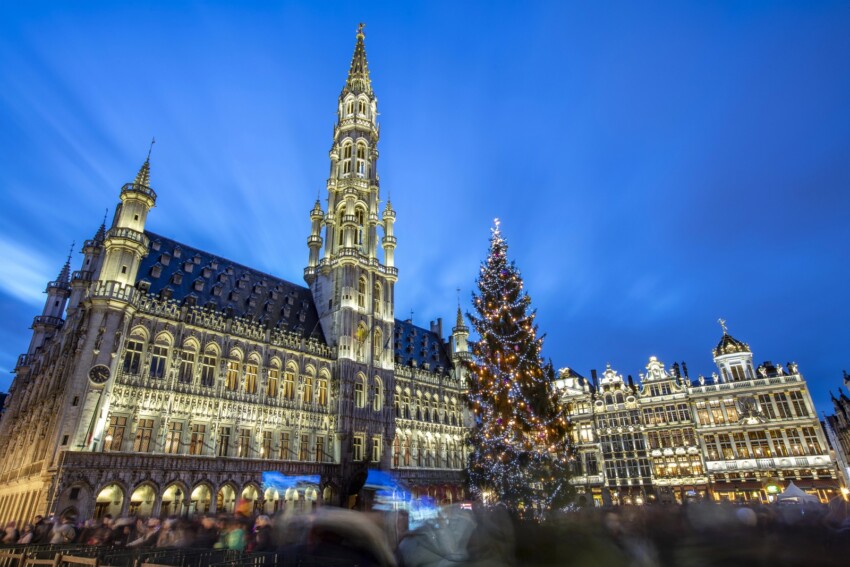
Every year, from late November onwards, Brussels transforms into Europe’s Christmas capital. The Christmas markets of the Belgian capital — officially called Plaisirs d’Hiver (Winter Wonders) — are considered among the most beautiful and spectacular on the continent, attracting over 2.5 million visitors per edition. The appeal lies not only in the over 250 wooden chalets that animate the historic centre: the entire city dresses itself in lights and decorations, creating a unique atmosphere that goes far beyond the traditional Christmas market.
The heart of the event is the celebrated Grand Place, a UNESCO World Heritage site, illuminated each evening by a sound and light show that projects colours and music across the facade of the Gothic Town Hall. But the Brussels Christmas markets extend along a route of approximately 3 kilometres that touches some of the most charming squares in the centre: Place de la Monnaie, the Bourse, Place Sainte-Catherine, the Marché aux Poissons and Place De Brouckère. Between a cup of hot chocolate and a freshly baked waffle, between ice-skating rinks and observation wheels, the Winter Wonders experience is one of the most compelling reasons to visit Brussels in winter.
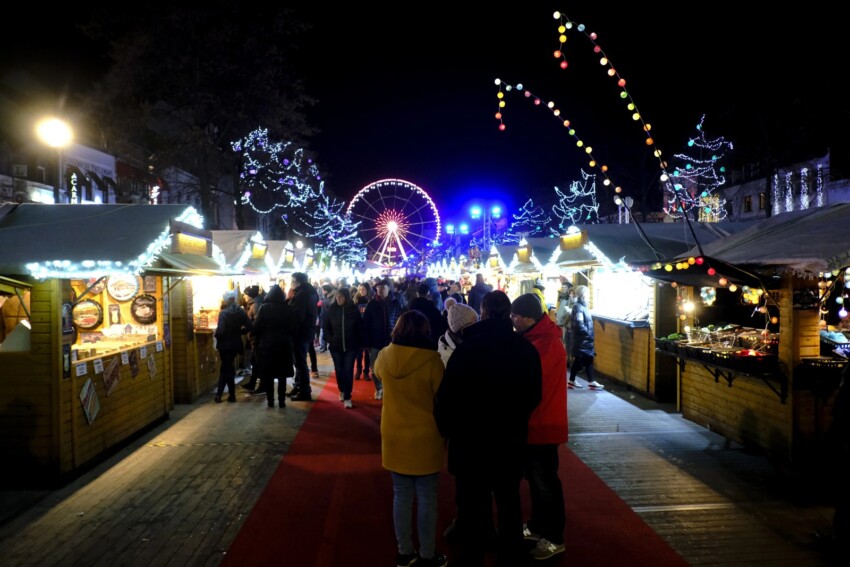
The Winter Wonders in Brussels are not concentrated in a single square but develop along an articulated route connecting the most evocative points of the historic centre. Each area has its own atmosphere and speciality: knowing about them in advance will allow you to organise your visit efficiently and not miss anything important.
The Grand Place is the essential starting point. Here you’ll find the main Christmas tree and a life-size nativity scene that contributes to the square’s intimate atmosphere. But the absolute highlight is the free light and sound show projected onto the facade of the Gothic Town Hall: a musical show that changes theme each year, on schedule every hour (twice hourly on weekends) from dusk until the market closes.
Arrive at least twenty minutes early to secure a good viewing position: on weekends and during the holidays the square fills up quickly. The best time is during the first evening projections, when the sky is still tinged with blue and the contrast with the gilded lights of the Town Hall reaches its maximum intensity. Don’t forget to look up at the facades of the Maisons des Corporations, the medieval guild houses: decorated festively, they look as though they’ve stepped out of a fairy tale.
Heading north from the Grand Place you’ll reach Place Sainte-Catherine, the gastronomic and commercial heart of the Winter Wonders. This is where the majority of the approximately 250 wooden chalets are concentrated, with stalls offering Christmas crafts, original gift ideas, decorations and typical Belgian products. The atmosphere is that of a classic market, more intimate and authentic than the grandeur of the Grand Place.
In this area you’ll find the large Ferris Lotto Wheel observation wheel, 55 metres high, with 42 cabins offering a spectacular view of the illuminated city. The nighttime experience, when the market lights blend with the illuminated profiles of the belfries, is simply unforgettable. Nearby, the Marché aux Poissons (Vismet), the former fish market transformed into a convivial space, hosts gastronomic chalets and family activities.
Place De Brouckère is the heart of winter sports and entertainment. Here you’ll find the large indoor ice-skating rink, with a surface area of 800 m², surrounded by gastronomic chalets and illuminated installations. It’s the liveliest spot in the markets, perfect for families with children and for those wanting to spend a few hours enjoying movement and fun.
In recent editions the rink has been accompanied by three curling lanes, the traditional Scottish winter sport that has won an increasingly broad audience in Belgium as well. Entry to the ice-skating rink has an additional cost compared to free access to the market; we recommend checking updated rates on the official event website before your visit, as they vary each year.
The stretch from the Bourse (Stock Exchange) along Boulevard Anspach is ideal for a more relaxed stroll between chalets. Opposite the imposing neoclassical Bourse building are gastronomic stalls and heated spaces perfect for a break. This is also where 27 chalets bearing the artisan-producer mark are concentrated, offering exclusively handmade products from their creators: ceramics, jewellery, textiles and decorative objects of superior quality compared to average offerings.
Along Boulevard Anspach, pedestrianised during the Christmas period, street lights extend for several blocks creating a particularly evocative corridor of light during evening hours. It’s one of the most photographed stretches of the entire route, especially when the reflections of lights multiply on pavements wet from the frequent Brussels rain in November and December.
Though not officially part of the market, the Galeries Royales Saint-Hubert are an essential stop during the Christmas season. These elegant 19th-century covered passages, among Europe’s oldest, are decorated with festive luminous displays that reflect off the glass and iron vaulting. The shop windows of Brussels’s most famous chocolate makers become authentic miniature works of art, with Christmas-themed compositions rivalling Parisian window displays.
The Galeries are just steps from the Grand Place and represent the ideal place to shelter from rain (or cold) without forgoing the festive atmosphere. Enter via the galerie du Roi and exit from the galerie de la Reine to walk through them in their entirety: the internal route takes about ten minutes, but you’ll rarely manage less than half an hour between shop windows, cafés and chocolate aromas.
Alongside the Winter Wonders, the Brussels by Lights initiative transforms 171 streets across the city into a luminous route that extends well beyond the market perimeter. Artistic installations by international artists, light arches, projections on historic buildings and thematic decorations make every evening walk through Brussels city centre a continuous visual experience.
Don’t miss a detour to the Manneken Pis, the city’s bronze symbol which during the Christmas period is often dressed in a festive-themed costume: one of the traditions most beloved by Brussels residents, who eagerly await discovering each year which outfit has been chosen for the occasion.
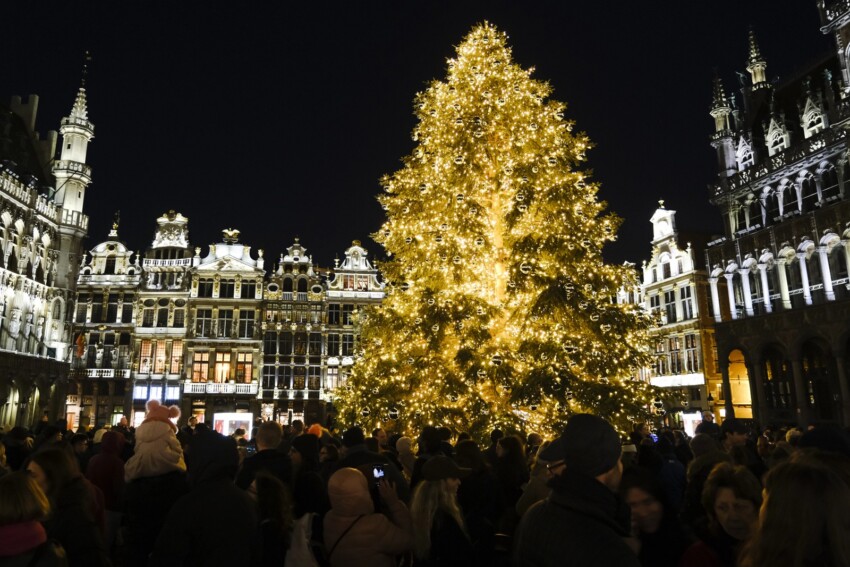
Brussels Christmas markets have a relatively recent history compared to the celebrated Alsatian or German markets, yet in just a few decades they have managed to establish themselves as one of Europe’s most anticipated Christmas events. The first edition of what we now know as Plaisirs d’Hiver dates back to 2001, when the Brussels municipal authorities decided to create a winter event capable of revitalising the historic centre during cold months and attracting an international audience.
Success was immediate: already in the early editions the markets attracted hundreds of thousands of visitors, driven also by Brussels’s strategic position as Europe’s capital and easy accessibility from the surrounding countries. In 2003, just two years after launch, the event was proclaimed Europe’s most original Christmas market, a recognition that consolidated its international reputation.
Growth was steady through the 2000s and 2010s, with a progressive increase in the number of chalets, attractions and locations involved. From an event concentrated around the Grand Place, the Winter Wonders progressively expanded towards surrounding squares, reaching the current format covering the entire historic centre with a route of over 3 kilometres. Fundamental was the decision to integrate attractions such as the ice-skating rink, the observation wheel and family activities, transforming the market from a simple commercial fair into a genuine urban winter entertainment experience.
An important milestone in the event’s history was also the decision to include in the regulations an increasing share of artisan-producers, distinguishable from commercial stalls thanks to a dedicated mark. This choice, controversial at implementation stage, helped raise the quality level of the offering and differentiate the Brussels market from the many similar events that have proliferated in European cities in recent years.
Each year the event’s theme and the Grand Place sound and light show are renewed, guaranteeing regular visitors fresh reasons to return.
Access to the Brussels Christmas markets route is completely free: no entrance ticket is required to stroll between the chalets, watch the light show at the Grand Place or admire the Brussels by Lights illuminated installations. This free access is one of the event’s strengths compared to other European markets that have introduced entry fees in recent years.
Attractions with a charge are instead the ice-skating rink, the observation wheel and curling rinks. The Ferris Lotto Wheel observation wheel costs approximately €10 for adults and €6 for children under 12 years; it is also accessible to people with reduced mobility. Ice-skating rink rates vary depending on the time of day and generally include skate hire.
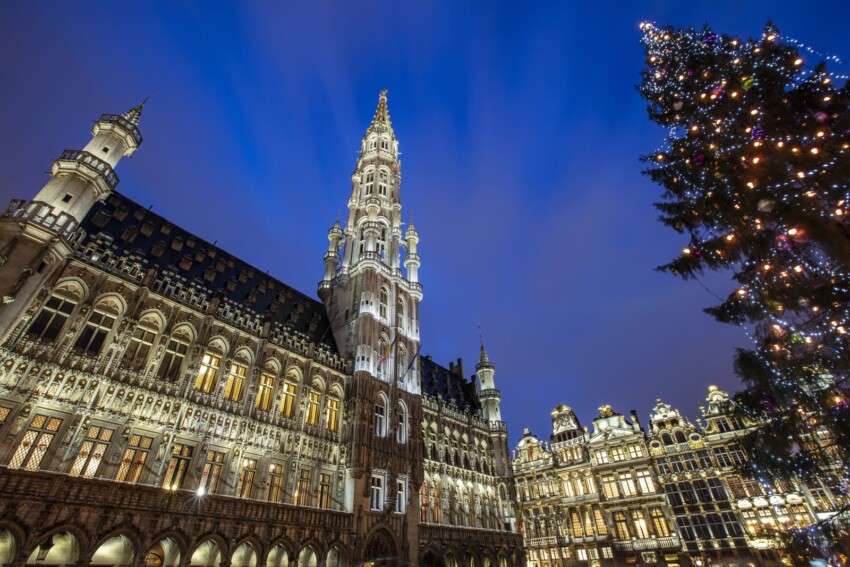
The Brussels Christmas markets are generally open from late November until early January. Standard opening hours are 12:00 to 22:00 daily. Exceptions apply to specific dates: 24 December (Christmas Eve), 31 December (New Year’s Eve) and closing day, when hours end at 18:00. On 25 December and 1 January the markets remain regularly open until 22:00.
The sound and light show at the Grand Place begins at dusk and repeats every hour; on weekends the frequency doubles with shows every half hour during peak hours. We recommend arriving around 17:00-17:30 on weekdays to watch the first evening projections with fewer crowds.
Weekdays (Monday to Thursday) see the lowest visitor numbers, particularly in the first weeks of December before school holidays bring families and organised groups to the city. If you can choose, the period between 1 and 15 December generally offers a more intimate atmosphere.
Weekends — and particularly the weekends of the Immaculate Conception (8 December) and just before Christmas — see peak visitor numbers: Place Sainte-Catherine and the Grand Place can become very crowded during mid-afternoon hours. On these days it’s best to arrive at opening time (12:00) or around 19:00, when part of the crowds have already left.
As for weather, Brussels in December is often rainy and windy. Waterproof clothing and comfortable, waterproof shoes are essential: the route is almost entirely outdoors and the historic centre’s cobblestones can become slippery in rain. Temperatures average between 2°C and 7°C; on the coldest days, which often coincide with the finest weather, the thermometer can drop close to freezing.
To walk through the entire Winter Wonders route without rushing, including a meal break and watching the light show, you’ll need at least 3-4 hours. Those wanting to ride the observation wheel, skate and visit the Galeries Royales should allow a full day. We suggest dividing your visit into two moments: a first afternoon circuit to explore the market route in daylight, and a second evening circuit to enjoy the illuminations and the Grand Place show.
Visiting Brussels’s Christmas markets without sampling at least some of the local specialities would be a missed opportunity. The gastronomic offering at the chalets is extensive and of high quality, blending Belgian traditions with international flavours.
Waffles are the undisputed star: you can choose between the Brussels version, lighter and rectangular, and the Liège variety, denser with caramelised sugar that melts delightfully on the tongue. Belgian frites, double-fried for perfect crispness and served in traditional paper cones with a wide choice of sauces, are another essential stop. Don’t miss the hot chocolate, made with genuine Belgian chocolate: rich, creamy and utterly different from the powdered versions you might be used to.
For warming up, mulled wine and traditional Belgian Christmas beer are the most popular drinks. Recent editions have seen a growing selection of hearty Alpine dishes such as tartiflette and raclette, perfect for refuelling during your evening stroll on the coldest nights. For something lighter, smoutebollen — sweet fried dumplings typical of Belgian festivities — are a delightful alternative.
Brussels’s Christmas markets are far more than a collection of market stalls. Over the course of more than five weeks, the event features free concerts, carol singers, street performances and themed markets across the various squares along the route. The detailed programme is published each year on the event’s official website and includes performances by local bands, school choirs and street artists.
One of the most beloved attractions, especially for children, is the vintage carousel positioned near Place Sainte-Catherine: a classic historic ride that adds a nostalgic touch to the whole atmosphere. For the more active, in addition to the ice-skating rink and curling, sledding runs are available, which in recent editions have become progressively longer and more elaborate.
On Thursday evenings, some editions of Winter Wonders have featured an ice-skating disco at night, with music and lights on the skating rink: a hugely popular event among young Bruxellois that transforms the family-friendly market atmosphere into something more festive and evening-oriented. The Noire Tower, a 13th-century medieval tower nestled among the modern buildings of Boulevard Anspach, is specially illuminated during the Christmas period and deserves a closer look: it’s one of the oldest surviving remnants of the city’s original fortifications.
If you’re planning your visit around Christmas Day or New Year’s Eve, it’s worth booking a seat at the Christmas mass in the Co-Cathedral of Saints Michael and Gudula, just a short walk from the Grand Place: the Christmas liturgy in this 14th-century Gothic church is a profoundly moving experience. New Year celebrations are centred around the Grand Place and the markets, with fireworks displays and public concerts.
Culturally, the Winter Wonders period coincides with special openings of Brussels’s major museums. The Atomium and Mini Europe — both accessible by metro — feature Christmas decorations and special programmes during the festive season: an excellent option if you’re bringing children or want to combine your market visit with a museum experience. You can find out more about the programme on the what to see in Brussels website.
To make the most of Winter Wonders’s evening atmosphere, the ideal solution is to stay in the historic centre, just steps from the Grand Place or Place Sainte-Catherine. The Sablon district, full of art galleries and chocolateries, is an elegant and peaceful alternative about 10 minutes’ walk from the markets. If you prefer the bustling centre, you’ll find plenty of options in the Bourse district and along Boulevard Anspach.
Be aware that during the Winter Wonders period, hotel availability is significantly reduced, particularly on December weekends and during the holiday period. It is strongly advised to book well in advance, ideally by September or October for peak dates. You’ll find all the information about the best areas and types of accommodation in the guide on where to stay in Brussels.
City Card allow you to save on public transport and / or on the entrances to the main tourist attractions.
 Hotel
Hotel  Budget accommodations
  Apartments
  Family Hotel
  Luxury Hotel