Reality and the unconscious intertwine in the surrealism of René Magritte, the brilliant artist to whom the city of Brussels has dedicated a museum that has become a top attraction!
You take the lift up, then descend by the stairs: a visit to the Magritte Museum in Brussels begins like this, upside down, much like the art of the brilliant artist it’s dedicated to.
Part of the prestigious Royal Museums of Fine Arts of Belgium, one of the country’s most important cultural institutions, the Magritte Museum houses the world’s most extensive collection dedicated to painter René Magritte, the artist who, alongside Spaniard Salvador Dalí, brought Surrealist art to its highest levels.
Dreamlike visions alongside pragmatic advertising graphics: the museum offers a comprehensive overview of Magritte’s life and career, an eclectic artist who ventured into the most diverse fields.
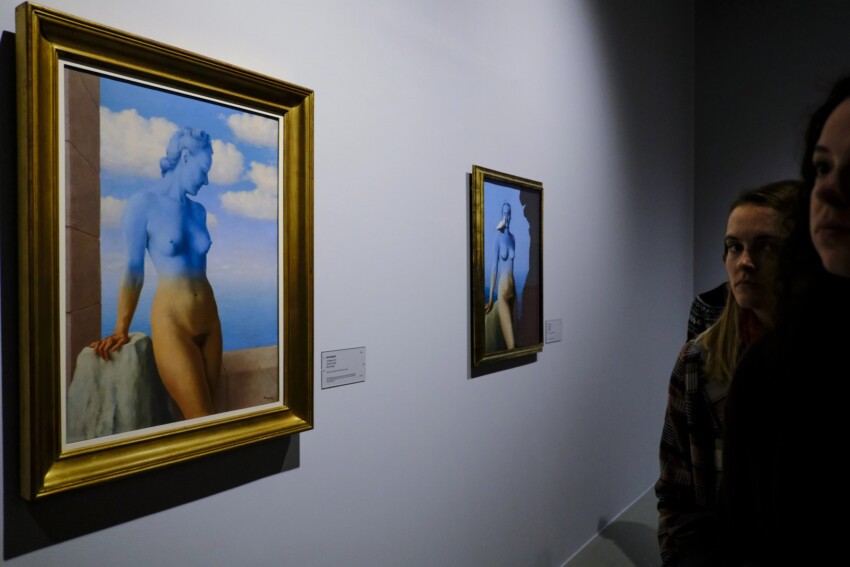
Many visitors complain that the museum is too dark. In fact, many rooms are deliberately dimly lit for both practical and symbolic reasons: on one hand, the need to preserve particularly fragile paper works, and on the other, the desire to recreate Magritte’s intimate and dreamlike world. Low lighting also helps direct attention directly to the artworks.
Upon leaving this museum, you’ll experience the unsettling sensation that the absurdity of reality is absolutely normal.
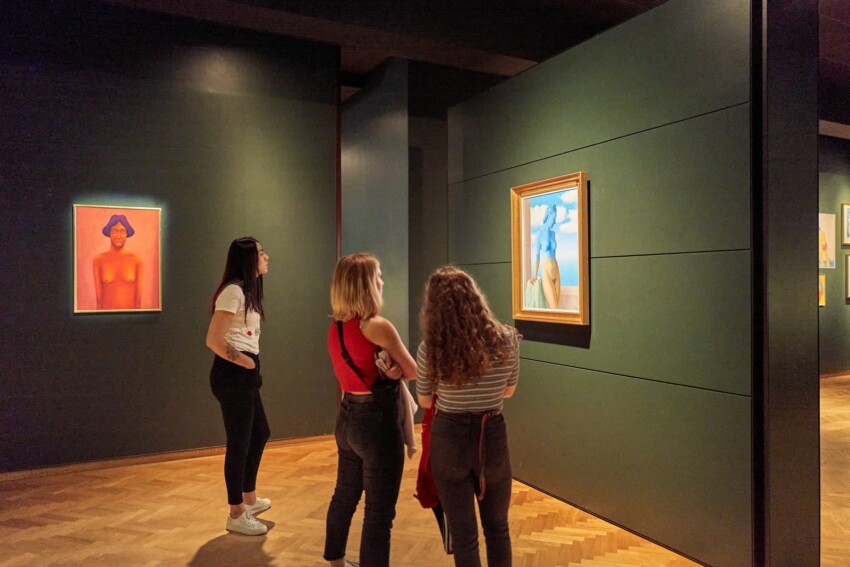
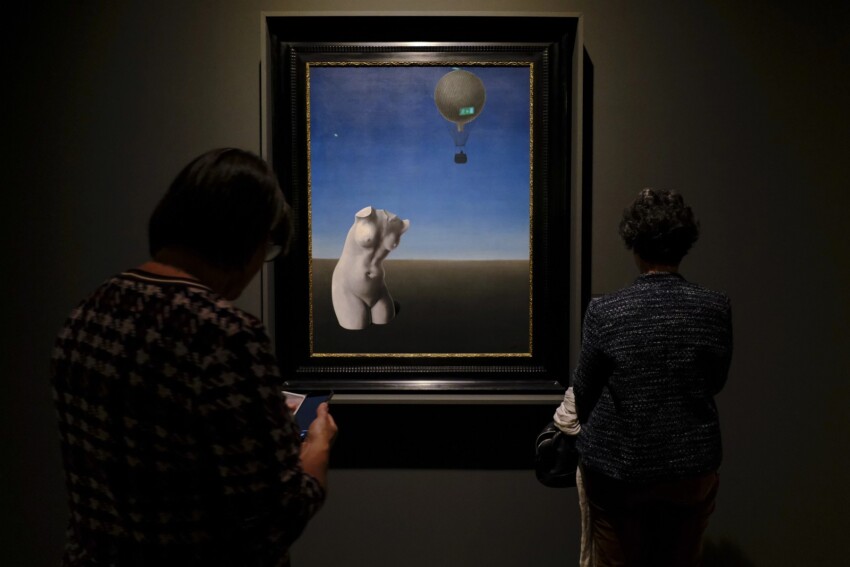
The Magritte Museum collection is a fascinating journey through Magritte’s thinking, his recurring themes, the movements and artists who influenced him most, and the numerous artistic fields he explored. On display you’ll find paintings, including some of his most famous works, as well as drawings, sculptures, advertising posters, photographs, films and musical scores.
The museum also houses the world’s largest collection of works from the “vache” period, an important era as his artistic style underwent significant evolution during this time. Drawing inspiration from caricature drawings and comic strips, which were beloved by the popular culture of the era, Magritte became more rapid, aggressive and incisive.
Don’t expect to see paintings of cows as subjects of the “vache” works: the word “vache” in French is commonly translated as cow, but actually has various meanings. Magritte used it to ironically allude to the Fauvism artistic movement, which his works parody.
The museum itinerary unfolds from the upper level, accessed by lift, down to the lower floors, following a chronological path divided as follows:
third floor: 1898-1929, the Constructivist period and initial contact with the “7 Arts” group.
second floor: 1930-1950, Magritte’s return to Brussels. During this period, the artist worked in advertising: whilst he dismissed these as “idiotic works”, these experiences were essential for defining his concept of imagery. In the same period, Magritte had his first contacts with the Communist Party and was banned by the Nazis. These were the years he moved towards Surrealism. The “vache” period works date from the post-war years.
first floor: 1951-1967, his mature works.
cinema: the visit concludes with screenings of short films dedicated to the artist and clips from films he loved and drew inspiration from for his works.
Admission Tickets to the Magritte Museum
Admission tickets to the Magritte Museum can be purchased online or at the museum’s ticket office up to half an hour before closing.
You can purchase a single ticket for entry to the Magritte Museum alone or a combined ticket for other venues of the Royal Museums of Fine Arts of Belgium.
Discounts are available for adults over 65 and students up to 26 years old with a valid international student card. Children and young people up to 18 years old enter free.
Skip-the-Line Ticket for the Magritte Museum
Given the high visitor numbers at the Magritte Museum, it’s recommended to book tickets in advance directly online. By purchasing your ticket online, you’ll be able to avoid the queues that form daily at the ticket offices.
Free Admission with the Brussels Card
Entry is also free for holders of the Brussels Card, Brussels’s official tourist card, and for everyone on the first Wednesday of each month from 1:00 PM onwards.
Here are some helpful information to make the most of your visit to the Magritte Museum:
Due to the very high visitor numbers, only a limited number of people at a time are permitted to enter. Bear this in mind when planning your visit.
Audioguides in Italian and visual guides for the deaf in English are available for an additional charge.
Prams are not permitted inside the museum. If travelling with infants, bring a baby carrier or sling.
The museum has numerous facilities including a cloakroom, a café-restaurant and a well-stocked gift shop with a wide selection of Magritte-themed souvenirs and books.
Throughout the museum’s walls are numerous quotations from the artist. These are collected in a small booklet available for purchase at the gift shop inside the museum.
For a complete understanding of Magritte’s universe, after visiting the museum dedicated to him in Brussels’s historic centre, you can also visit the studio-house in Jette, where the artist lived between 1930 and 1954.
The History of the Magritte Museum
The Magritte Museum was originally part of the Museum of Modern Art within the Royal Museums of Fine Arts of Belgium.
Soon the other galleries of the modern art museum found themselves overshadowed by the uniqueness of this collection and the curators’ desire to continuously expand it. All too evidently, the Magritte Museum deserved its own dedicated home.
The elegant former Hôtel Altenloh building in central Brussels was chosen, restored in 1984 and used as a venue for temporary exhibitions. The Magritte Museum opened to the public on 2 June 2009.
In its first eight years of operation, the museum increased international visitor numbers by 65% and today is visited annually by more than 300,000 people from around the world.
Getting to the Magritte Museum
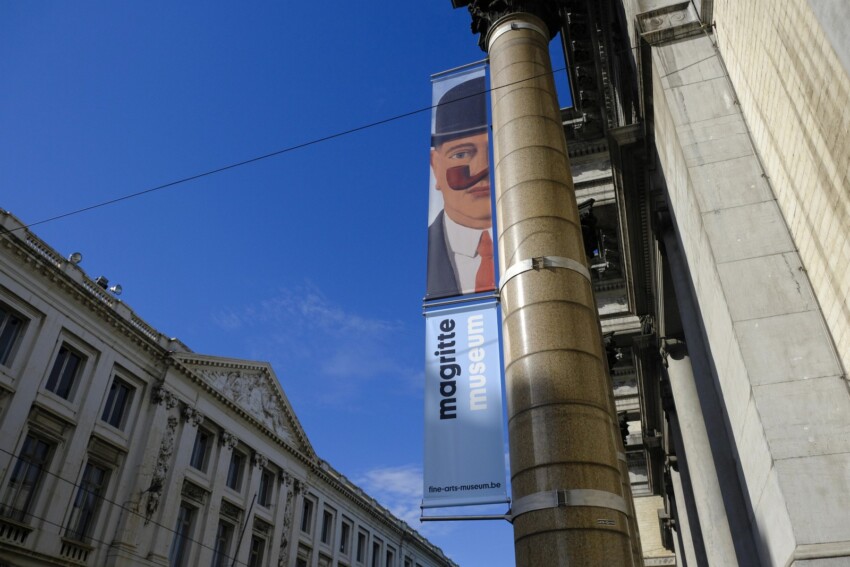
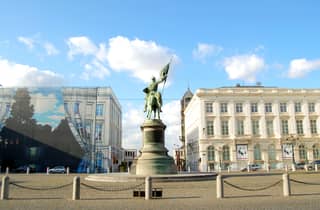
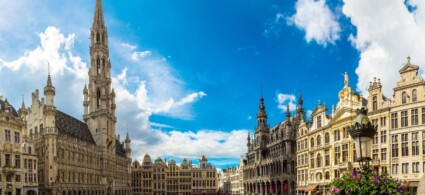
The entrance to the Magritte Museum is located on the historic Place Royale (Konigsplein), in central Brussels. It’s easily accessible by metro, tram and bus. Brussels Central Train Station is approximately 10 minutes’ walk away.
Near the museum there are also three paid car parks.
 Hotel
Hotel  Budget accommodations
  Apartments
  Family Hotel
  Luxury Hotel