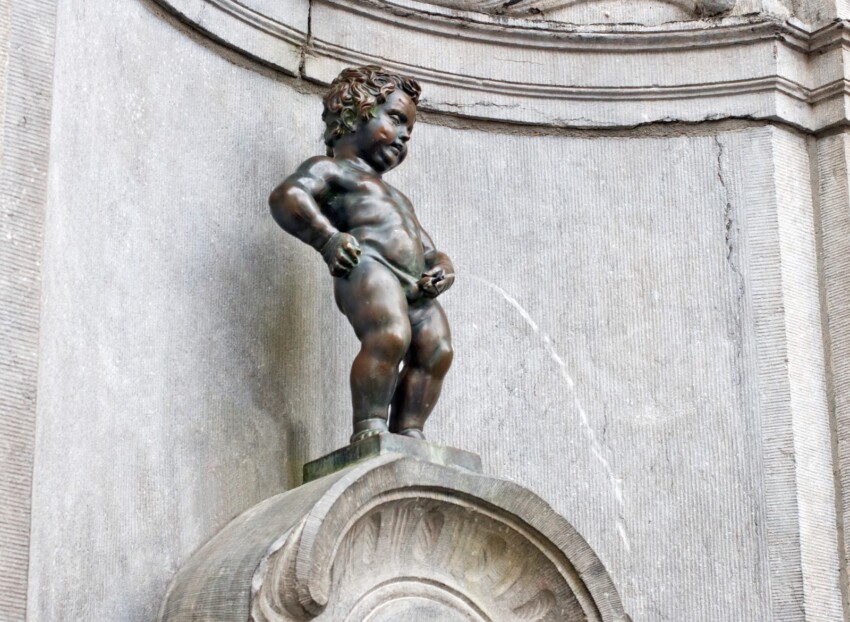
The name of Manneken Pis tells you everything you need to know: in Dutch, it translates to “little boy having a wee”. Only a self-aware city with a passion for folklore and legends like Brussels could choose as its symbol a tiny bronze statue, a mere 61 cm tall, depicting a child urinating into a fountain.
Positioned within an ornate rococo niche, Manneken Pis appears utterly diminutive and, let’s be honest, isn’t exactly a sculpture of great artistic merit. In fact, it would be entirely unremarkable if it hadn’t become, over the centuries, the embodiment of Brussels’ rebellious and irreverent spirit.
Adored by Brussels residents, Manneken Pis is considered so important to city life that he’s accorded numerous honours: on special occasions he’s dressed up like a noble or celebrity, visiting heads of state pay him tribute, and throughout his history he’s received honorary positions and medals.
During a trip to Brussels, it’s therefore essential that you, too, pay homage to Brussels’ most famous citizen, now an unmissable attraction in Belgium’s capital. Be warned, though: Manneken Pis disappoints tourists expecting something grandiose, but delights those with a keen sense of humour.
Give it a go regardless, even if you risk saying what many other tourists do: “That’s it?”. You might just happen upon a lucky day when, instead of water, the cherub dispenses excellent Belgian beer to passing visitors.
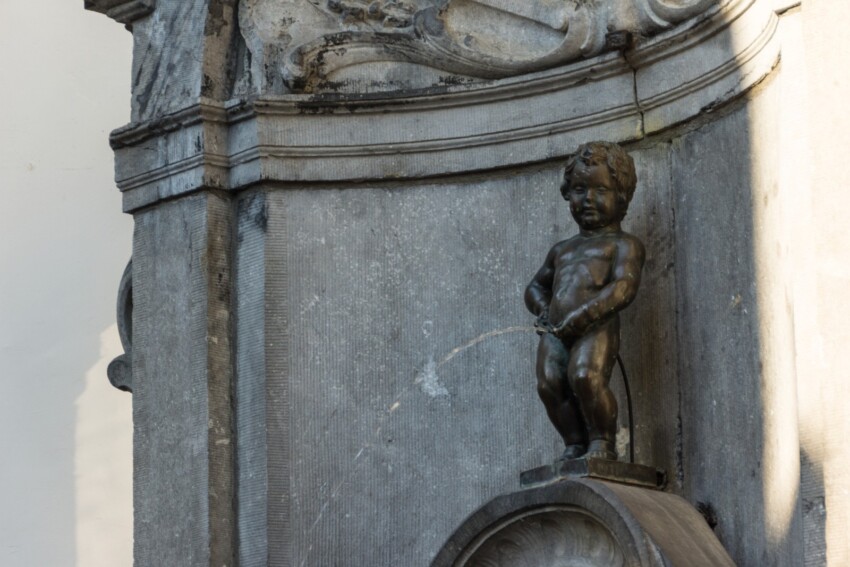
The Manneken Pis admired by all tourists stands on a street in the heart of Brussels, just a stone’s throw from the Grand Place.
It’s one of the city’s main tourist attractions, a compulsory stop on every guided tour, so crowds of visitors constantly jostle in front of the statue: you’ll need to wait patiently for your turn to catch a glimpse of the tiny statue and snap a photo.
All that effort to see… a copy! The outdoor statue is not the original, which has been moved inside the Musée de la Ville de Bruxelles in the Maison du Roi at Grand Place to prevent theft, vandalism and weathering.
Ironically, the original statue attracts far fewer visitors than the replica. It’s still worth paying the museum entrance fee though, as alongside Manneken Pis it houses a rich collection of documents and historical objects tracing Brussels’ fascinating history.
Dozens upon dozens of Manneken Pis replicas dressed in original costumes can be admired at the GardeRobe Manneken Pis museum. A single ticket allows you to visit both the Musée de la Ville de Bruxelles and the GardeRobe Manneken Pis.
The tradition of dressing the little boy statue dates back to the seventeenth century. Not only has it been maintained over the centuries, but it’s become one of the most important elements of city folklore and has intensified significantly since the 1980s. Today Manneken Pis is dressed approximately 130 times a year, according to a precise calendar available online.
To date, this rather unremarkable cherub has accumulated a wardrobe befitting a queen, with over 1,000 outfits, and the number continues to grow.
A significant selection of the most sumptuous, curious or historically significant costumes is on display at the GardeRobe Manneken Pis museum, located just steps from the famous statue. The collection is divided into seven themes: geography, folklore, social issues and civic associations, business, celebrities, sport and fashion designers.
The oldest costume in the collection dates back to 1747 and was donated to the city by French king Louis XV to make amends for a theft attempt by his soldiers.
Don’t miss this hilarious exhibition showcasing Brussels’ most famous cherub dressed as a Chinese character, Father Christmas, a sporting champion, a celebrity in designer clothes… and countless other incarnations you’ll enjoy discovering during your visit. On the first Sunday of each month, entry to GardeRobe Manneken Pis is free.
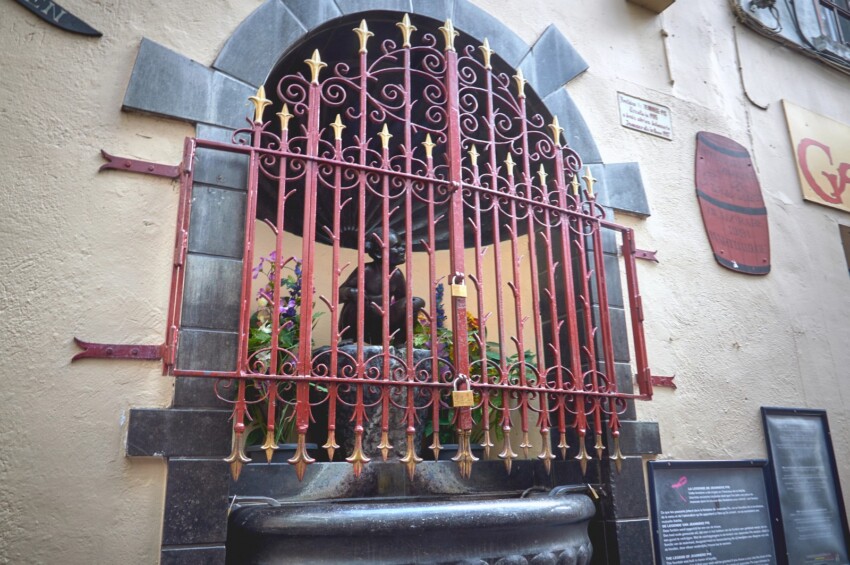
Less famous than Manneken Pis but equally irreverent is its female counterpart, Jeanneke Pis, a bronze statue of a young girl having a wee. Commissioned by the municipal council in 1985 and inaugurated two years later, it hasn’t managed to capture the hearts of locals and tourists.
Besides the wee, Jeanneke Pis shares with her far more celebrated brother her diminutive size (standing just 50 cm tall) and plenty of stories surrounding her. According to one such tale, the statue wasn’t a municipal initiative but was placed there by an obscure restaurant owner to attract new customers.
Photographing the girl won’t require you to jostle for position, as tourists show little interest in her. You might, however, struggle to find her, as she’s located at the end of a dead-end alley not far from the famous Delirium Café, enclosed behind iron bars.
There’s finally a third statue on the same theme – a little dog in the typical raised-leg pose… though unlike Manneken Pis and Jeanneke Pis, it doesn’t actually dispense any liquids. It’s called Zinneke Pis and was installed on what was once an unremarkable street to revitalise the area.
The origins of Manneken Pis are uncertain, with legends blending with historical records. City folklore has offered various interpretations of the statue’s origins – here are the two most famous:
The first reliable historical mention of a fountain featuring a statue of a child having a wee dates to a written document from 1451. Originally it was a public fountain used for water distribution to citizens.
In 1619 the original statue was replaced with a new bronze statue created by baroque sculptor Jérôme Duquesnoy the Elder.
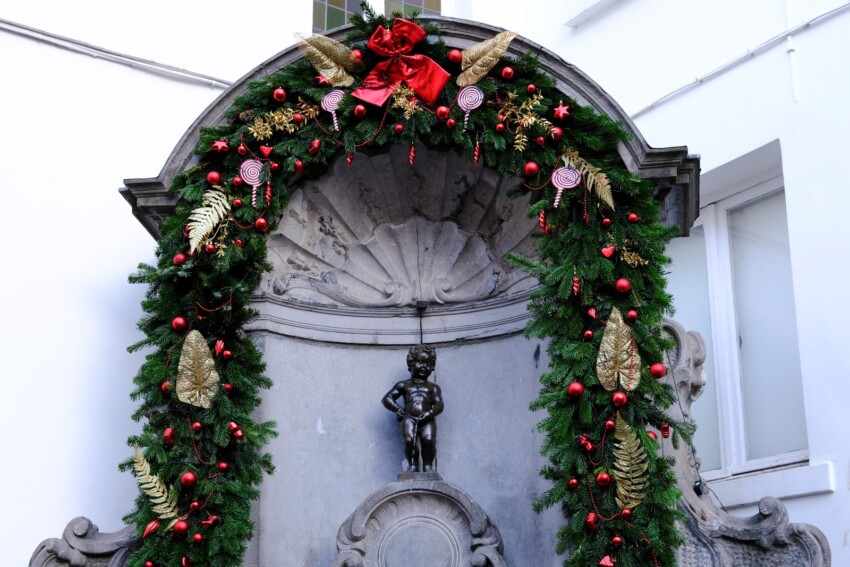
In 1770 the simple column supporting the cherub was replaced with the elegant rococo-style fountain we see today. Despite its magnificence, the richly decorated niche makes the statue appear even smaller – something many tourists complain about.
In 1851 the fountain lost all practical function and became purely ornamental.
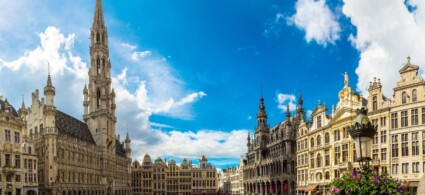
The Manneken Pis statue is located in the heart of Brussels and is easily accessible on foot from the Grand Place: from the square with the Hôtel de Ville in front of you, take the street on your left.
If you prefer to reach the area by public transport, we recommend the metro; the most convenient metro stops are Anneessens, Bourse and Central.
City Card allow you to save on public transport and / or on the entrances to the main tourist attractions.
 Hotel
Hotel  Budget accommodations
  Apartments
  Family Hotel
  Luxury Hotel