Six museums, 20,000 artworks, one prestigious cultural institution: the Royal Museums of Fine Arts of Belgium in Brussels are a must for art lovers.
Six exceptional museums united under a single banner: the Royal Museum of Fine Arts of Belgium (RMFAB), a prestigious institution representing the most comprehensive collection of Belgian art from the 15th century to the present day with over 20,000 works and documents.
Of these, some 10,000 are available to view online, but experiencing them in person within their elegant premises is an entirely different emotion. This extraordinary museum complex is the jewel in Belgium’s cultural crown and is an absolute must-see attraction for all art enthusiasts.
You’ll be able to admire masterpieces by major names in Northern European art, such as Magritte, Bruegel, Rubens, David, Rodin, Bacon, Khnopff, Moore, as well as works by lesser-known artists who contributed to the evolution of art history.
Each of the museums that make up the complex has its own history, purpose and identity, yet all share modern, meticulously curated displays and a vision of art as precious humanity’s heritage.
The Royal Museum of Fine Arts of Belgium comprises six different collections: some are housed within the same building, whilst others are located in different parts of the city.
The most visited museums are those in the city centre, namely the Old Masters Museum and the more recent Magritte Museum and Fin de Siècle Museum.
In addition to permanent collections, the Royal Museum hosts temporary exhibitions that explore the themes of the collections or examine new trends in contemporary art, plus numerous activities for both children and adults.
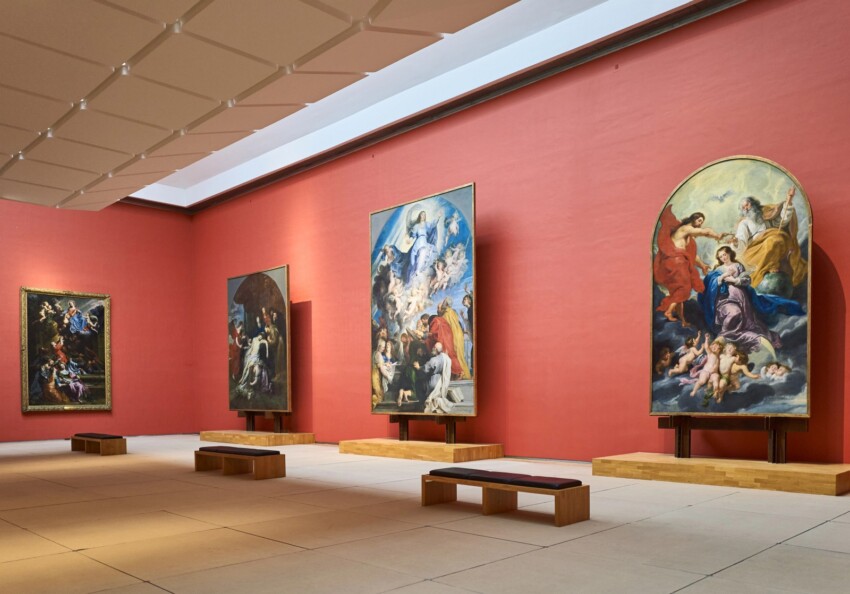
The name Old Masters Museum more accurately describes what you’ll find within one of Belgium’s most important museums. The masterworks displayed in the historic nucleus of the Royal Museum are not Greek or Roman artefacts, but rather the great works of Flemish and European masters created between the 15th and 18th centuries.
It was none other than Napoleon Bonaparte who founded the museum, which only became a prestigious public cultural institution with Belgian independence, enriched over the centuries thanks to private donations as well.
The core of the collection comprises masterpieces by Hieronymus Bosch, Rogier van der Weyden, Petrus Christus, Dirk Bouts, Hans Memling, Lucas Cranach and Gerard David.
The 16th century is dominated by the genius of Pieter Bruegel the Elder, two of whose most famous works you can admire here: The Fall of the Rebel Angels and The Census at Bethlehem.
The 17th century is represented by the great painters of the Flemish school (Peter Paul Rubens, Anthony Van Dyck and Jacques Jordaens) and the Italian and French schools.
Museum of Modern Art
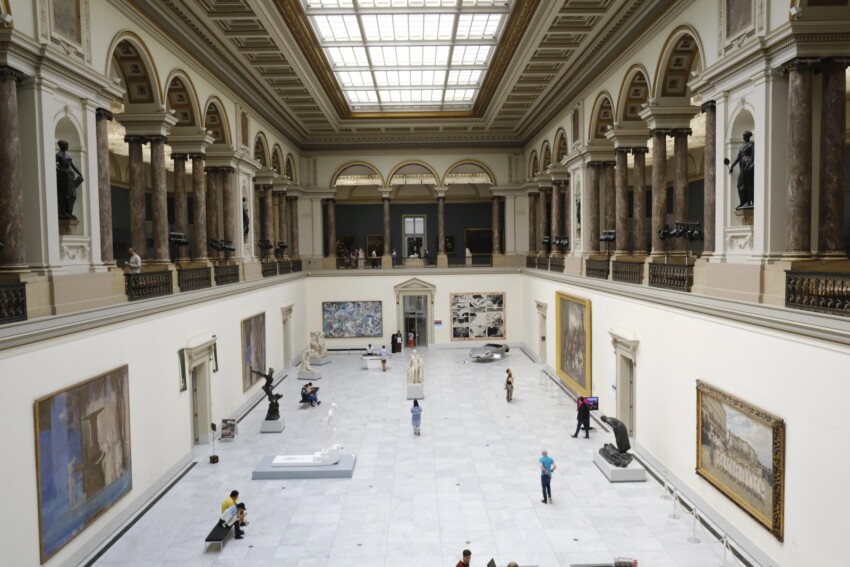
The Museum of Modern Art has long represented the other pole of the Royal Museum complex, one focused on artistic movements of the 19th and 20th centuries and contemporary art.
It is currently undergoing redefinition: part of the collection has been relocated to create the new museums dedicated to Magritte and the fin de siècle, and a move of the museum’s premises is planned. Currently, the museum displays works created from 1914 onwards on a rotating basis. The collection includes internationally renowned artists such as Bacon, Dalí, David, Panamarenko, Alechinsky and Fabre.
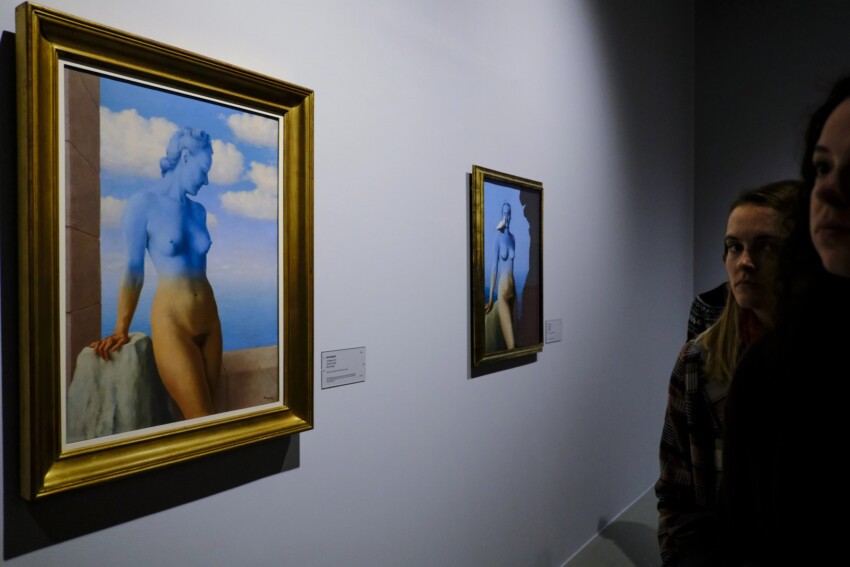
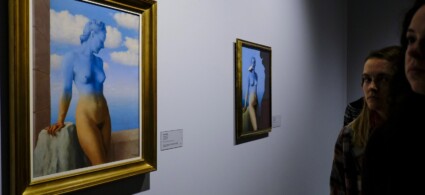
Opened in 2009, the Magritte Museum in Brussels is one of the newest and most beloved of the Royal Museums: a fitting tribute to one of Belgium’s greatest artists, surrealist genius René Magritte. It boasts 2,500 m² of exhibition space, plus a further 120 m² dedicated to a creative space for workshops and activities.
The museum collection, the most important in the world dedicated to Magritte, comprises approximately 230 works and documents that trace the entire career of the artist, offering a comprehensive overview of his life and the different phases of his work.
The most recent addition to the museum complex is the Fin de Siècle Museum, which opened in 2013 and is entirely dedicated to a brief but incredibly intense period in the evolution of modern art: the years spanning the 19th and 20th centuries.
The museum’s aim is to provide an overview of the multitude of artistic movements and cultural ferment from 1868, the year the Société libre des Beaux-Arts was founded, through 1914.
The multidisciplinary exhibition includes works by the most representative authors of the period (including James Ensor, Henri Evenepoel, Fernand Khnopff, Léon Spilliaert, Georges Minne), historical documents in other artistic fields such as theatre and photography, and six 3D reproductions of Art Nouveau buildings.
A visit to this museum will immerse you in the effervescent and optimistic atmosphere of the fin de siècle.
If you’re drawn to Romanticism as an artistic and literary movement, don’t miss the opportunity to visit a museum entirely dedicated to Antoine Wiertz, an emblematic and sometimes controversial figure of Romanticism in Belgium.
A painter, sculptor and writer, Wiertz loved spectacular art and excess, creating gigantic paintings sometimes up to eight metres long. His preferred subjects were dramatic, sometimes horror-inspired scenes: his most famous work, Two Girls (La Belle Rosine), depicts a young nude woman gazing into the eyes of a skeleton.
The Wiertz Museum is a studio-museum, established by agreement between the artist and the Belgian government in 1850 and became part of the Royal Museums as early as 1868.
The Meunier Museum is dedicated to a figure little known to the general public yet of great importance for the development of modern art in Belgium: painter and sculptor Constantin Meunier.
His creations, inspired by industrial development, politics and Belgian society at the end of the 19th century, offer a realistic representation of the working world of the time.
Like the Wiertz Museum, the Meunier Museum is housed in a location with an immediate connection to the artist: in this case, the house-studio where he spent the last years of his life. Acquired by the Belgian state in 1936, it was only opened to the public three years later; annexed to the Royal Museums from 1986, today it displays a selection of approximately 150 works and documents.
Map
In the following map you can see the location of the main places of interest mentioned in this article.
Admission tickets
You can choose from three types of admission tickets depending on how many of the Royal Museum of Fine Arts of Belgium museums you intend to visit:
combined ticket for all museums
ticket for Old Masters and Fin de Siècle collections
ticket for Magritte Museum
The Wiertz and Meunier museums offer free admission.
Discounts are available for adults aged over 65, students up to age 26 with a valid international student card, and groups. Children and young people up to 18 years of age are free.
On the first Wednesday of each month, admission is free from 1:00 PM onwards. Holders of the Brussels Card can enter free every day.
Admission to the Royal Museum of Fine Arts of Belgium does not always include access to temporary exhibitions: some are free, whilst others have varying admission charges.
For a few euros extra, you can hire an audioguide, available in Italian only for the Magritte Museum (for the other museums it’s available in English). Video guides in English are also available.
Tickets can be purchased online or at the museum box offices up to half an hour before closing.
How to reach the Royal Museum of Fine Arts of Belgium
The six museums that make up the Royal Museum complex are located at different points throughout the city.
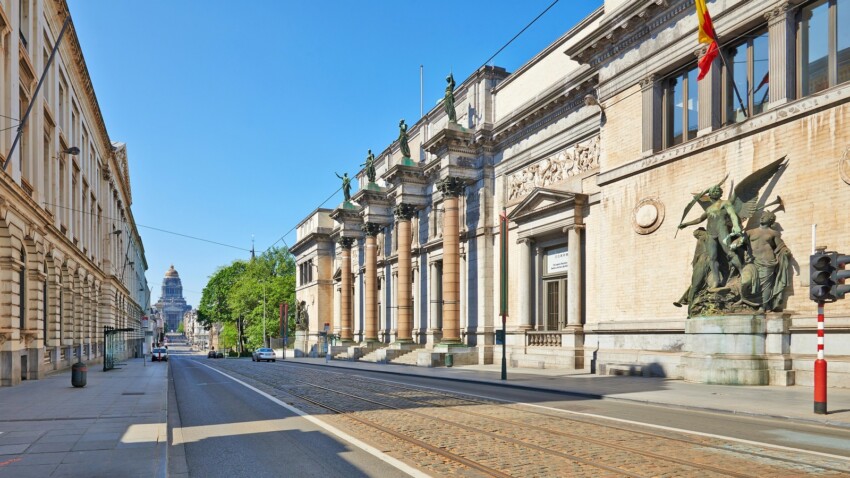
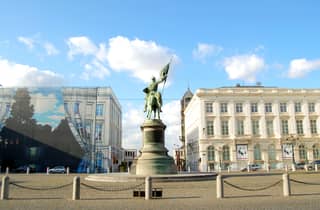
The main buildings, which house the four most important museums (Old Masters Museum, Museum of Modern Art, Fin de Siècle Museum and Magritte Museum), are concentrated in the area around Place Royale and Rue de la Régence.
This is a very central area, easily accessible by public transport. The four museums are very close to one another (some within the same building), so once you’re in the area you can walk from one to the other.
The two smaller museums (Meunier Museum and Wiertz Museum) are located in the Ixelles/Elsene district, which is also well served by public transport.
Useful information
Address
Rue de la Régence 3, 1000 Bruxelles, Belgium
Contacts
TEL: +32 2 508 32 11
Timetables
Monday: Closed
Tuesday: 10:00 - 17:00
Wednesday: 10:00 - 17:00
Thursday: 10:00 - 17:00
Friday: 10:00 - 17:00
Saturday: 11:00 - 18:00
Sunday: 11:00 - 18:00
Transports
Bus stops
Royale (114 mt)
Where is located Royal Museums of Fine Arts of Belgium
 Hotel
Hotel  Budget accommodations
  Apartments
  Family Hotel
  Luxury Hotel