1 Bedford Hotel Brussels
Brussels - Rue du Midi 135
Set in the heart of Brussels' historic centre, Bedford Hotel is a boutique hotel located just 450 metres from the Grand-Place.
Book now
Home to important institutions, a thriving business hub and a wonderful tourist destination: Brussels’s hotels cater to travellers arriving in Belgium’s capital for all manner of reasons.
Choosing where to stay in Brussels very much depends on what brings you here. A romantic weekend? A cultural festival? A business meeting? A multi-day itinerary across Belgium? Or something else entirely?
You’ll find charm and romance in the medieval alleyways of the historic centre, but also in nearby neighbourhoods such as Saint Gilles or Flagey. Modernity and comfort define the hotel scene in the EU Quarter, whilst for glamour and nightlife, Ixelles is your best bet. For budget-conscious travellers seeking peace and quiet, the outlying residential areas are an excellent choice, with public transport connections making getting around straightforward.
Thanks to its multifaceted identity as a business, political and tourism hub, Brussels boasts a considerably wider range of accommodation than many other European capitals, which can feel a touch overwhelming for first-time visitors. Our mini-guide to the best areas to stay in Brussels will help you find the hotel that best suits the kind of break you’re after.
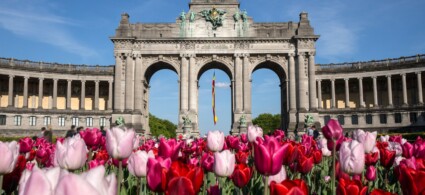
Staying in the centre is always the preferred choice for tourists, as the central areas concentrate the most famous attractions alongside plenty of restaurants and venues for an evening out.
Although Brussels’s city centre isn’t vast—you can easily walk around it—the area breaks down into distinctive neighbourhoods suited to different types of holiday.
The streets bordering the Grand Place are the most sought-after by tourists for their central position and the zone’s distinctive charm.
Unsurprisingly, they’re also the priciest: the Grand Place vicinity hosts some of Brussels’s most luxurious hotels, housed within magnificent historic buildings tastefully restored to offer guests all modern comforts.
This area is ideal for those wanting to treat themselves to something special and for couples seeking a romantic getaway.
If four or five-star hotels are beyond your budget, head to Saint Catherine, a central neighbourhood just a stone’s throw from the Grand Place that offers better prospects for finding a decent mid-range hotel.
The heart of this characterful quarter is the eponymous square, once home to a lively fish market; that maritime tradition lives on through the neighbourhood’s delightful seafood restaurants.
Saint Catherine is particularly recommended for younger travellers, who’ll find themselves mixing with Erasmus students and international couples drawn to the neighbourhood by its affordable rents.
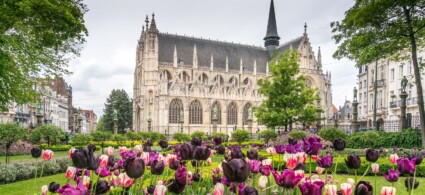
The neighbourhoods of Les Marolles and Sablon occupy the southern part of Brussels’s centre and are recommended for those wanting to experience less touristy areas whilst remaining close to the city’s main attractions.
They’re renowned as quarters of craftsmanship and antiques, a reputation earned through the high concentration of artisan workshops, art galleries, design shops and the flea market held every weekend between Place du Grand Sablon and Place du Jeu de Balle. They’re also known as sweet neighbourhoods, thanks to their abundance of patisseries and chocolateries.
Of the two, Les Marolles is the more authentic, retaining a genuine neighbourhood character where you’ll often hear residents speaking in a dialect blending French and Flemish. The area is rich in bars and small cafés, perfect for an evening without venturing far.
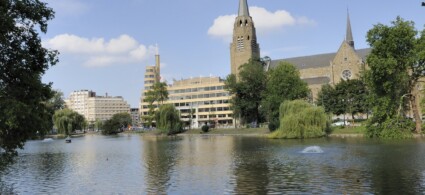
Just beyond Brussels’s historic centre lie other captivating neighbourhoods perfect as a base for a break. They’re accessible within 10–15 minutes by metro or tram.
Ixelles, south of the centre, is considered Brussels’s chic quarter, brimming with boutiques, trendy restaurants and venues, hip clubs. It’s crossed by Avenue Louise, a long thoroughfare lined with luxury shops and upmarket hotels. This area is perfect for those who love shopping and nightlife.
A completely different atmosphere characterises Saint Gilles, the bohemian quarter: home to two universities, it’s the preferred neighbourhood of artists and intellectuals (and aspiring ones).
It’s an ideal destination for those fond of alternative cultural events, art museums and unpretentious venues where you can chat about music, film and literature over an excellent Belgian beer. Its winding streets and hidden squares retain an intimate, characterful atmosphere that appeals to young travellers and couples alike.
Other recommended areas to stay in Brussels whilst remaining close to the centre include Flagey and Etterbeek.
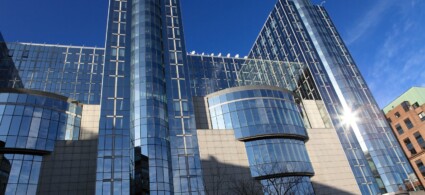
Brussels’s so-called European Quarter is where the European Union’s institutional headquarters are concentrated. The location isn’t inconvenient (it’s east of the centre, just 2 km from the Grand Place) but it’s a business district with rather a cold atmosphere, making it less appealing for holidaymakers.
However, it’s worth considering for one practical reason: hotels in Brussels’s EU Quarter are clearly designed for business travellers, mostly EU bureaucrats and businesspeople on working trips, and consequently tend to be fully booked during the week whilst emptying out at weekends and in August—precisely when tourists take their holidays.
During these periods, you can find modern, comfortable accommodation at significantly below the average price for mid to upper-range hotels.
If you’re looking for a hotel in this area, bear in mind that once offices close and employees head home, the neighbourhood becomes rather lifeless.
Looking for hotels in Brussels’s outlying residential neighbourhoods is recommended if you’re on a tight budget and seeking economical lodging, or if you’re arriving by car and want to avoid the traffic of the city centre. From the periphery, you can easily reach the centre by metro, bus or tram.
For a family holiday, the best options are Forest and Uccle, two peaceful and safe residential areas on Brussels’s outskirts. There isn’t a huge choice of hotels and bed & breakfasts, but the establishments available offer good value for money.
Use the form below to check room availability and prices in real time.
 Hotel
Hotel  Budget accommodations
 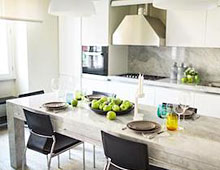 Apartments
 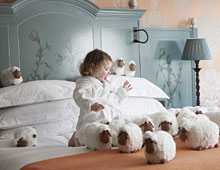 Family Hotel
 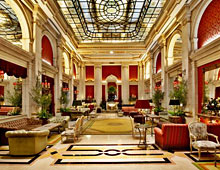 Luxury Hotel