Bestseller
From Brussels: Guided Day Trip to Bruges and Ghent
From 32,20 €
Buy the ticket
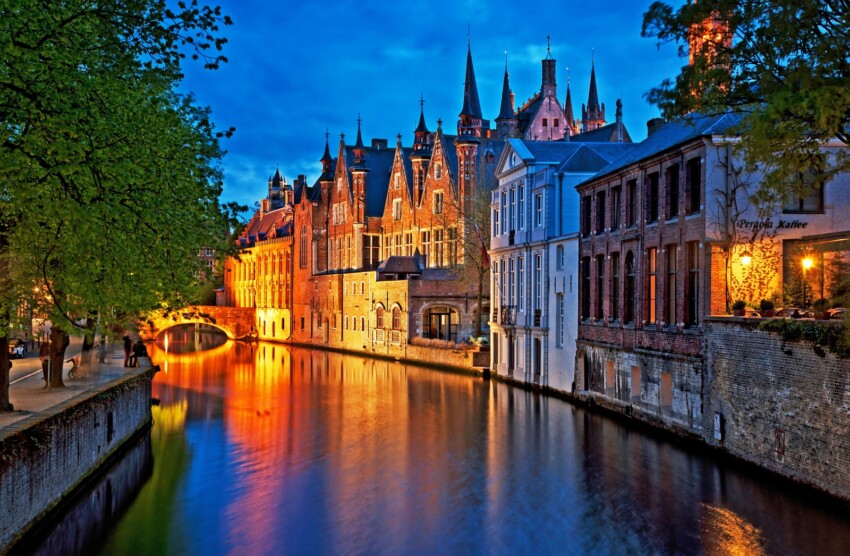
Known as the Venice of the North, Bruges or Brugge is a wonderful city near the Belgian coast, threaded by a labyrinth of navigable canals that wind through fascinating Gothic architecture.
Bruges, capital of West Flanders, is simply enchanting: the historic centre, listed by Unesco as a World Heritage Site, is surrounded by an oval moat that follows the course of the ancient and now vanished medieval fortifications, and is a whirl of picturesque cobbled alleyways connecting charming squares dominated by historic churches and old buildings with distinctive stepped gables.
The heart of the city is the Market Square where the Belfort tower rises. Nearby stands the magnificent Gothic Stadhuis, along with the Basilica of the Holy Blood.
Around Minnerwater, the Lake of Love, extends a delightful and romantic park that serves as the gateway to Bruges Beguinage.
Bruges is an enchanting city rightly defined as the Pearl of Flanders. Its medieval historic centre was listed by Unesco as a World Heritage Site and boasts splendid Gothic buildings, canals, cobbled alleys, art galleries, boutiques and cafés.
Begin your visit at Market Square, the nerve centre of the city, crowned by guild buildings, the wonderful Stadhuis, the town hall, and the Belfort, the stunning and imposing belfry tower.
Not far away are the important Groeningemuseum and the Church of Our Lady, which alongside the Basilica of the Holy Blood, is Bruges’s most important religious building. Also worth visiting are the Beguinage buildings in Bruges, a complex of houses built in the 13th century around a church by lay sisters.
Also interesting is the brewery De Halve Maan, the only one of the original 20 in the historic centre still operating.
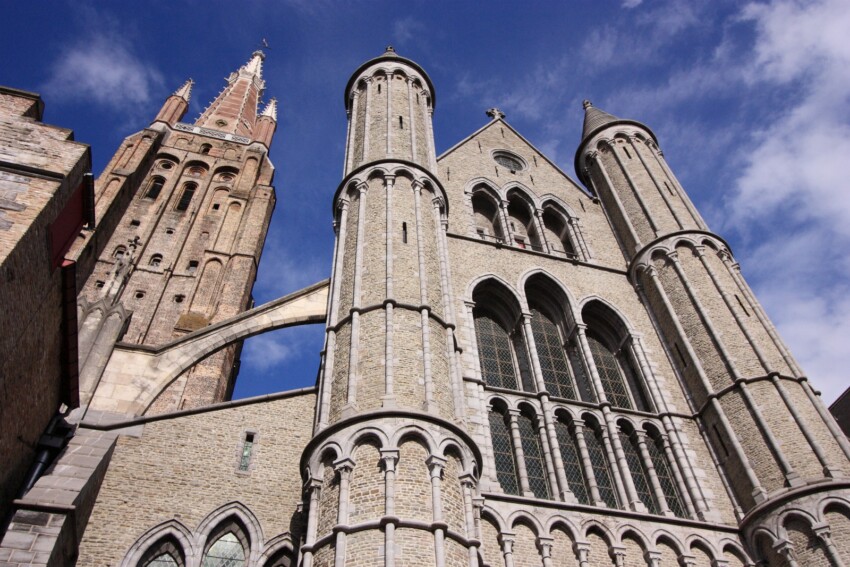
The Basilica of the Holy Blood in Bruges, Heilig-Bloedbasiliek in Dutch, was built between 1134 and 1157 as a chapel to the residence of the Count of Flanders.
The church is located near the Town Hall and comprises 2 chapels: the lower one, austere as it was built in Romanesque style, is dedicated to St Basil, whilst the upper one, richly decorated in Gothic style as it was revised in the 16th century, is dedicated to the Holy Blood. According to tradition, the relic of Joseph of Arimathea was brought to the city by Thierry of Alsace upon his return from his second crusade.
The small Museum of the Holy Blood is adjacent to the church and houses the reliquary covered with precious stones that holds the phial during the procession.
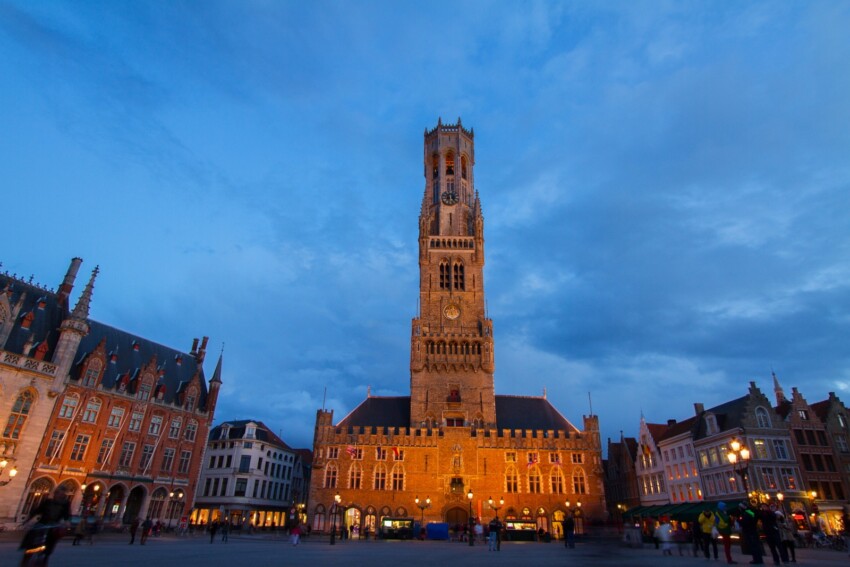
The belfry tower of Bruges, Beffroi in French, dating from the first half of the 13th century, dominates Market Square from a height of 83 metres. Climbing the narrow and steep 366 steps of the tower, you can admire the splendid urban panorama of Brugge with its red roofs and spires.
The medieval civic tower is famous for its clock mechanism, a carillon made up of 47 bells, still in working order, once used to organise the life of the medieval village. Other more recent decorations include a Renaissance-style sculpture of the Madonna and the coat of arms with a Belgian lion.
The Belfort is one of the city’s most important symbols and once served as an observation point. The octagonal upper section was added between 1482 and 1486. On either side and behind the tower stands the former covered market, a rectangular building with an internal courtyard.
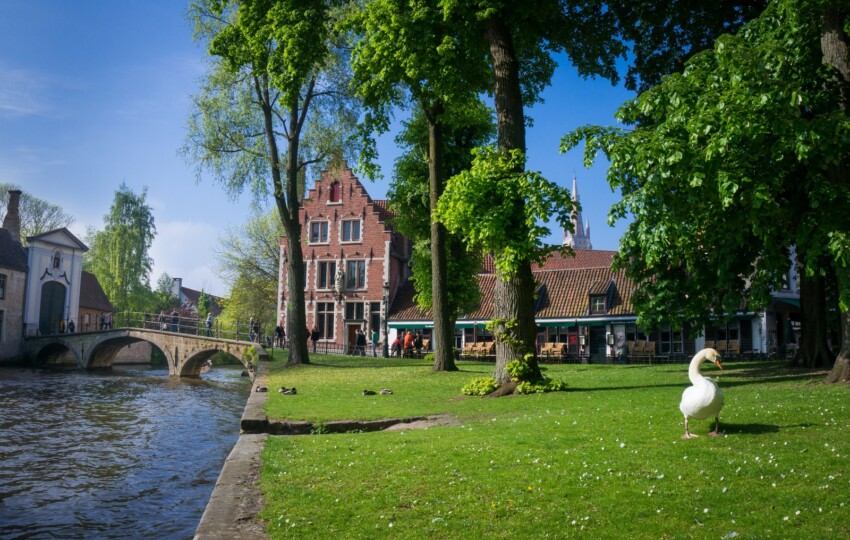
The Bruges Beguinage, the only one to survive in the city, is a late medieval urban settlement typical of the Netherlands and Wallonia. This complex of houses was founded in the 13th century around a garden and church to house lay sisters.
Since 1937 this structure has housed a congregation of Benedictine nuns and a small and interesting museum with 4 rooms showcasing an austere bedroom, a cloister with a well and a traditional Flemish kitchen that will give you insight into how the Begijntjes lived.
The Bruges Beguinage is located just behind the Lake of Love and was founded in 1245 by the Countess of Flanders Margaret of Constantinople. The largest and most imposing house is located in the back left corner of the garden.
The Brouwerij De Halve Maan is the only brewery operating today in the centre of Bruges, at Walplein, out of over 20 known in the past. This beer has been renowned since 1564, though the building where it is now produced dates from 1856.
This brewery offers an overview of contemporary production techniques and will allow you to discover the secrets of malt and hops, as well as delight in its products, cloudy triple-malt beers fermented for a short period.
The guided tour, lasting 45 minutes, concludes on the brewery’s roof where you can enjoy a stunning view of the city.
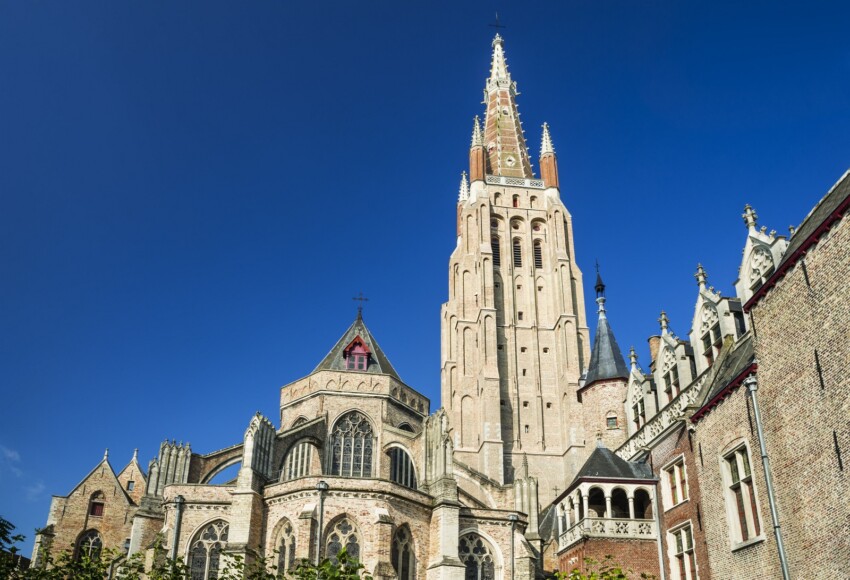
The Church of Our Lady, Onze Lieve Vrouwekerk, is an imposing building that can be admired from every corner of Bruges.
Built over 2 centuries, the church features a majestic brick tower approximately 115.5 metres tall, the second-highest masonry structure in the world after St Martin’s Church in Landshut.
Inside are various treasures, the most important being Michelangelo’s Madonna and Child, a sculptural group in an unusual meditative pose created in Carrara marble around 1501–1506 and donated to the church in 1514. Also exceptional are the paintings and tombs of Mary of Burgundy and Charles the Bold.
The Groeningemuseum, despite its small size, is Bruges’s most important art gallery. The museum is located in the Groeninge quarter and was designed by architect Joseph Viérin.
Across 11 rooms, 6 centuries of Flemish art and Renaissance paintings are displayed: works by Gerard David, Pieter Pourbus, Emile Claus and Marcel Broodthaers sit alongside the Flemish Primitive masters Jan Van Eyck, Rogier van der Weyden and Hans Memling.
The lively and refined painting technique, rich in detail, finds its supreme expression in Van Eyck’s Madonna of Canon Joris van der Paele, painted in 1436.
The international reputation of the Groeningemuseum is due not only to its exceptional permanent collection, but also to the prestigious temporary exhibitions regularly organised.
The refined Diamond Museum in Bruges, paradise for anyone who loves gems, was established to preserve ancient documents and tools from the production and processing of these precious stones.
Beyond discovering the 8 important characteristics of a diamond—lustre, thermal conductivity, hardness, colour, shape, diameter, weight and clarity—the exhibition takes you on a journey through time to the 15th century when the city was at the centre of the trade in sculptures, tapestries and jewellery. A large number of examples of jewellery from that period are visible in the museum.
The museum also displays a 252-carat rough diamond. Alongside the visit, you can watch diamond-cutting demonstrations for a small additional fee.
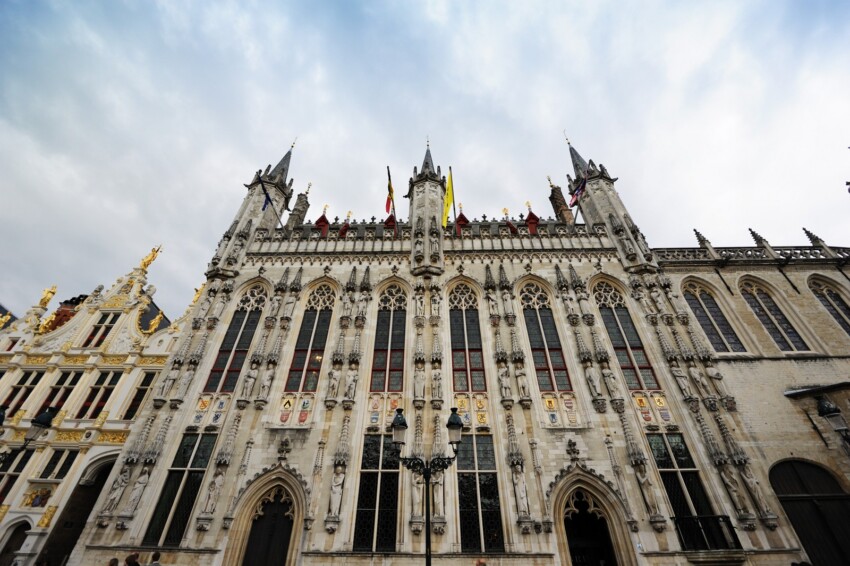
The magnificent Town Hall of Bruges, Stadhuis in Dutch, is one of Belgium’s finest examples of Brabant Gothic style.
The building, along with other historic palaces, overlooks the quiet Burg Square, not far from Market Square. Built from 1376 and completed in 1421, the Town Hall recalls the architecture of a sanctuary: its rectangular floor plan is enriched by corner towers and a pitched roof, and the imposing decorations testify to the city’s economic importance during the medieval period.
An absolute masterpiece is the Gothic Hall, with an imposing vaulted oak ceiling and neo-Gothic wall frescoes illustrating events in Bruges’s history, created following restoration work directed by architect Delacenserie that was necessary after the devastating fire of 1887.
Bruges Beer Experience (Museum of Bruges Beer) is an experience dedicated to celebrating and exploring the rich tradition of Belgian beer, which is renowned worldwide. It offers visitors the chance to learn about the history of beer in Belgium, the beer production process and the variety of Belgian beers available. The attraction includes multimedia exhibits, interactive information, tastings of local beers and more.
Bruges is considered the world capital of Belgian chocolate, and the best place to understand why is Choco Story, Belgium’s most visited chocolate museum. Housed in a historic palace in the heart of the city, the exhibition route takes visitors on a journey from the ancient Mayan and Aztec civilisations, where cacao was considered a sacred food, through to the artisanal production techniques of the contemporary Belgian chocolate industry.
The highlight is the live demonstration of chocolate making, during which visitors can watch master chocolatiers at work and taste freshly made pralines. Choco Story is suitable for all ages and can be visited in about an hour, making it an ideal stop even with children.
The white gate Kruispoort is one of the few remaining testaments to the impressive defensive walls built to protect Bruges in 1297 and is located along the eastern edge of the centre at the end of Paperstraat.
Turreted and imposing, the gate is located near the 15th-century Church of Jeruzalemkerk and today appears as it did in the early 1400s.
On the side facing the canal, the gate features 2 large circular towers, whilst on the city side the façade has 2 octagonal corner towers. The façade is divided into 2 storeys by a moulding and 4 windows open within corresponding niches with arches.
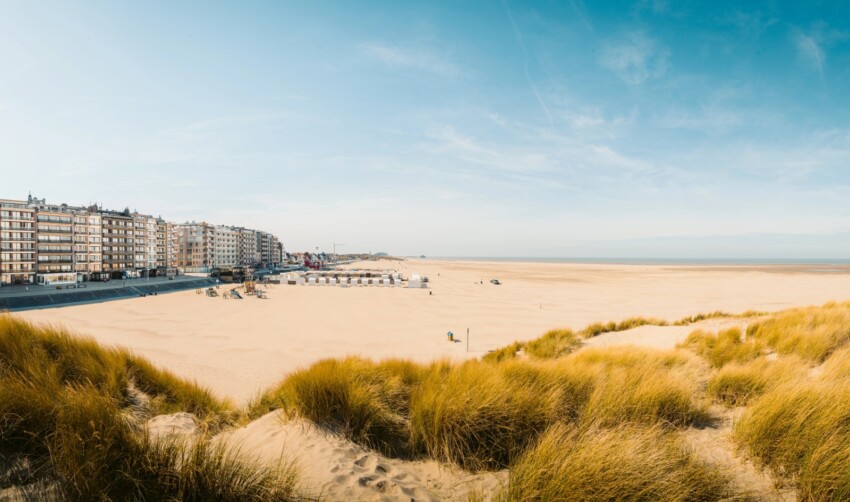
Just 14 kilometres from Bruges, Zeebrugge is its natural gateway to the North Sea and one of the most popular excursions for those staying in the city. The fishing village is the cruise port for visitors to Bruges: large cruise ships dock here, but it also has some surprises in store: the open-air museum Seafront, featuring a Cold War-era Russian submarine that can be visited from inside, and the morning fish market, where fishing boats unload freshly caught grey shrimp, sole and turbot. Half a day is enough time to breathe in the sea air and enjoy lunch at one of the waterfront restaurants.
In the following map you can see the location of the main places of interest mentioned in this article.
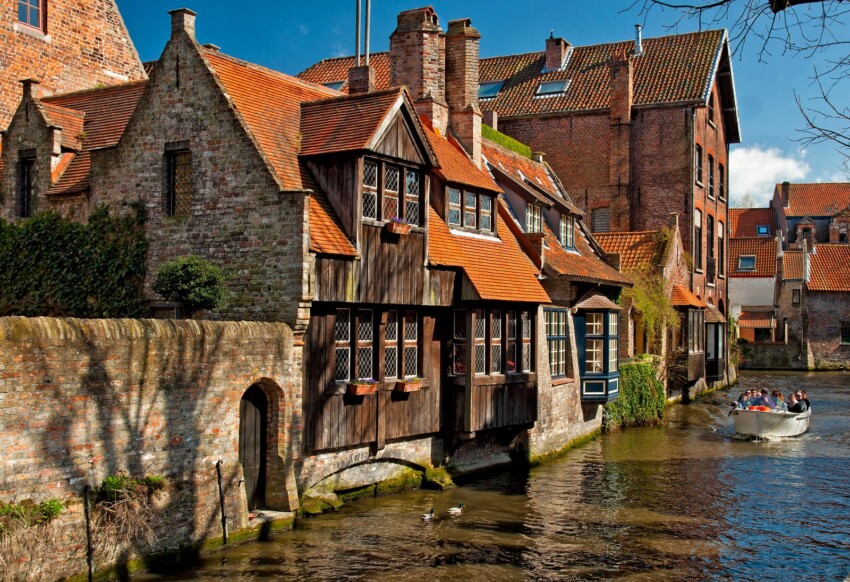
A visit to Bruges cannot be considered complete without a cruise along the canals that wind through the heart of this stunning medieval city, called by many the Venice of the North.
Ideal for those wanting to capture the city’s most romantic aspects and for those looking to discover charming corners from unusual perspectives, the boat tour winds between beautiful buildings from the 12th and 15th centuries.
The merchants’ houses, the old castle, the Belfort, the Church of Our Lady and, in general, the medieval architecture, characterised by stepped gables, will transport you back in time to when canals were used for commerce.
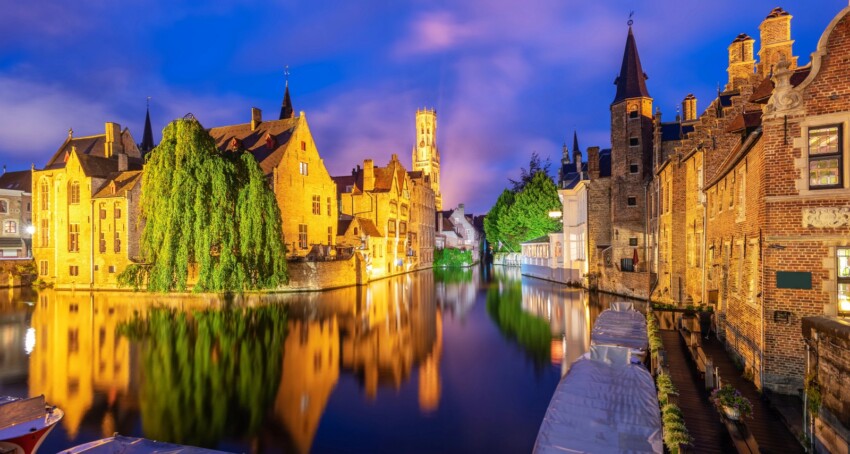
There are 5 ports in Bruges where you can board modern vessels, including Rozenhoedkaai, one of the city’s most photographed spots.
Discover Bruges through the eyes of expert guides who will take you on a tour of the city's hidden treasures. Participating in a free tour will allow you to capture the true essence of Bruges.
The free tours are a viable alternative to traditional guided tours. They work like this: participation is free and at the end of the visit you can leave a tip at your discretion. Below you will find our favourite free tour, otherwise you can see the full list by visiting this page.
From Brussels, Bruges and Ghent are the perfect destinations for a day excursion: both reachable in less than an hour by train, they concentrate canals, medieval architecture and gastronomy worth the journey within just a few square kilometres. To visit them properly without losing time with maps and navigation, the ideal solution is to opt for an organised guided tour: an expert guide will take you through the iconic sights, tell you stories and details you’d unlikely discover alone, and leave you free time for a traditional meal or an independent stroll.
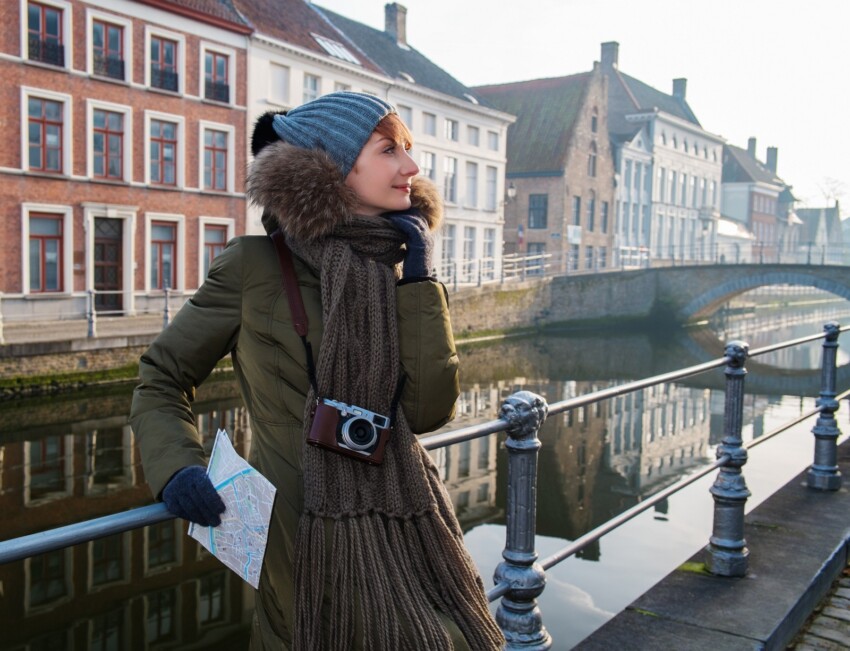
If you’re thinking of organising a romantic weekend getaway, Bruges is the destination for you.
This fairytale city, a jewel of Flanders, is one of Europe’s best-preserved medieval historic centres and is situated just under an hour from Brussels airport by train.
The canals and splendid Flemish architecture of the historic centre give it a unique charm: the Market Square with its Gothic buildings, the Belfort, breathtaking when illuminated in the evening, the little restaurants and cafés where you can enjoy a waffle or Belgian beer, and the Basilica of the Holy Blood are almost essential stops during your stay in Bruges.
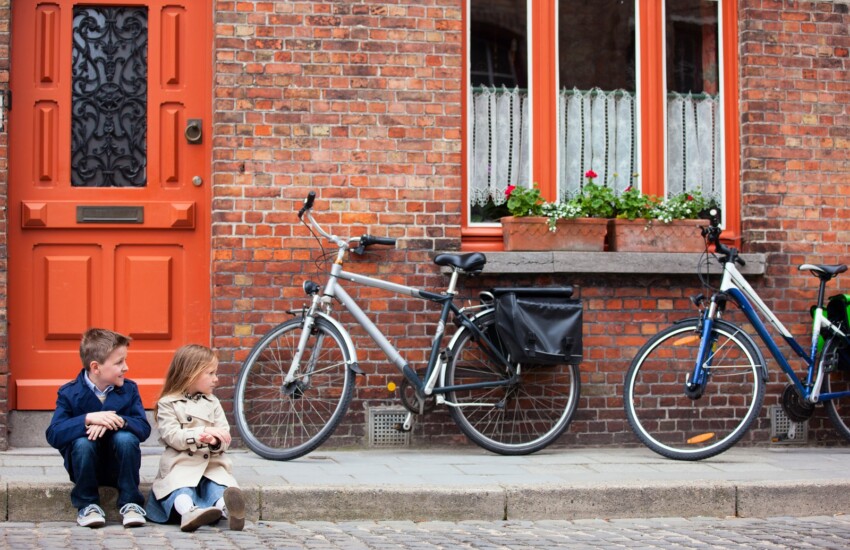
Visiting Bruges with children is truly a pleasure. Whether it’s the city’s fairytale appearance or the small, lively historic centre that hosts numerous chocolate-makers’ workshops, Bruges won’t disappoint you.
Take a boat trip along the canals that run through the city – tours typically last 30 minutes – relax with a horse-drawn carriage ride or visit the Chocolate Museum: Choco-Story is a 4-storey building with fun games for children and is housed within a 1480 palace not far from Market Square.
There are many specialist shops selling Belgian chocolate, and children will appreciate this stop.
Bruges has over 100 hotels and 150 B&Bs, but its exceptional beauty means they’re practically fully booked, especially at weekends and generally from Easter to October.
Treat yourself to a stay in the picture-postcard historic centre and sleep in one of the 15th-century buildings converted into beautiful hotels overlooking the labyrinth of cobbled streets or the canals. The old town has the best places to stay.
Sophisticated palaces with high standards host boutique hotels. Some properties also feature spa facilities.
If you’re looking for luxury, choose the Relais Bourgondisch Cruyce, a wonderful hotel in an enviable location beside the Groentenmarkt.
Located close to the Belgian coast, Bruges is very easy to reach.
Of the five international airports, only Brussels airport has direct flights to and from the UK. The airport is just over an hour away by train from Bruges: the central station is less than 2 kilometres from the centre. At least 2 trains depart every hour to Antwerp, a journey of approximately one hour and 20 minutes, Ghent, 25 minutes, Brussels and Ostend, 15 minutes by train. Connections with Rail Europe are excellent.
An excellent way to reach Bruges is to hire a car in Belgium and enjoy the splendid Belgian countryside.
What's the weather at Bruges? Below are the temperatures and the weather forecast at Bruges for the next few days.
 Hotel
Hotel  Budget accommodations
 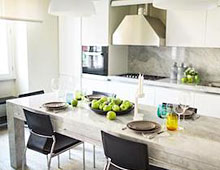 Apartments
 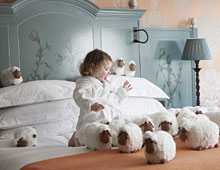 Family Hotel
 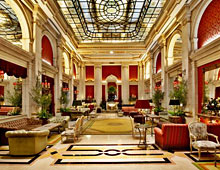 Luxury Hotel