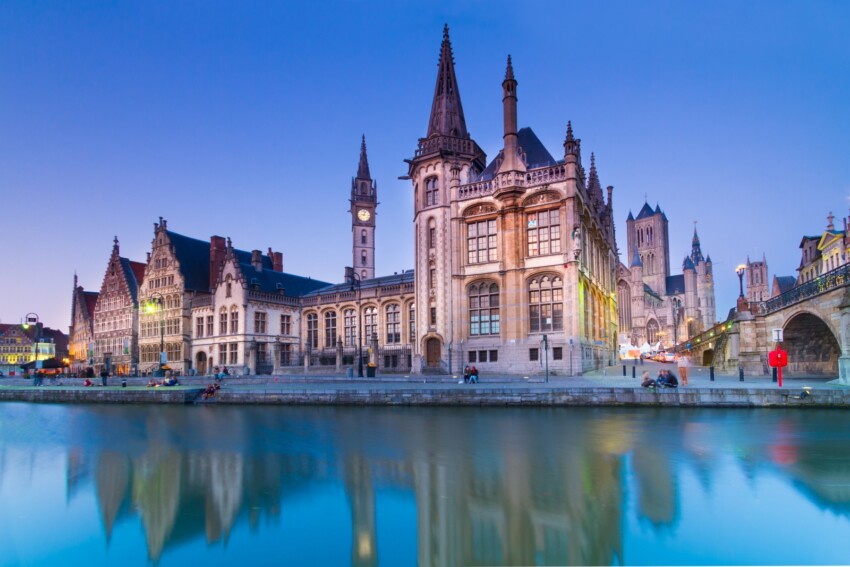
Bestseller
From Brussels: Guided Day Trip to Bruges and Ghent
From 32,20 €
Buy the ticket
Among Belgium’s most beautiful cities, Ghent (Gent in Flemish and Ghent in English) is ideally positioned at the centre of a triangle formed by Brussels, Bruges and Antwerp.
Beautifully preserved medieval buildings, romantic navigable canals and a range of interesting museums and art galleries make up the medieval historic centre. Key structures include Ghent Cathedral, the Belfry and Gravensteen Castle. The old Graslei harbour is also architecturally impressive, as are Ghent’s béguinages and several religious buildings.
Ghent’s historic centre is Belgium’s largest pedestrian area and it’s a pleasure to explore its palaces and little shops.
The Town Hall is one of the finest public buildings in Flanders, and the Museum voor schone Kunsten is the city’s most important museum, housing magnificent works by several Flemish masters. For contemporary art lovers, the SMAK is not to be missed. The Design Museum, housed in an 18th-century palace, is also highly worthwhile.
To reach Ghent, fly into Brussels Airport and then take one of the frequent trains that connect directly to the station at the airport, or hire a car and drive along the E40 motorway. Ghent is also accessible via the cruise ports of Antwerp and Zeebrugge.
Ghent is a jewel of a city in Flanders, as charming as Bruges though less well-known.
As you walk through the city, you’ll discover a rich architectural heritage comprising castles, cathedrals, churches and ancient merchant houses of unique charm. Take in the view from the panoramic terrace of Ghent’s Belfry, offering a unique glimpse of rooftops, canals and squares.
Admire the medieval Gravensteen Castle, Ghent’s béguinages—historic small neighbourhoods of low-rise houses that developed over centuries around small churches—and enjoy browsing the shop windows.
If you love street art, take a stroll along Werregarenstraat.
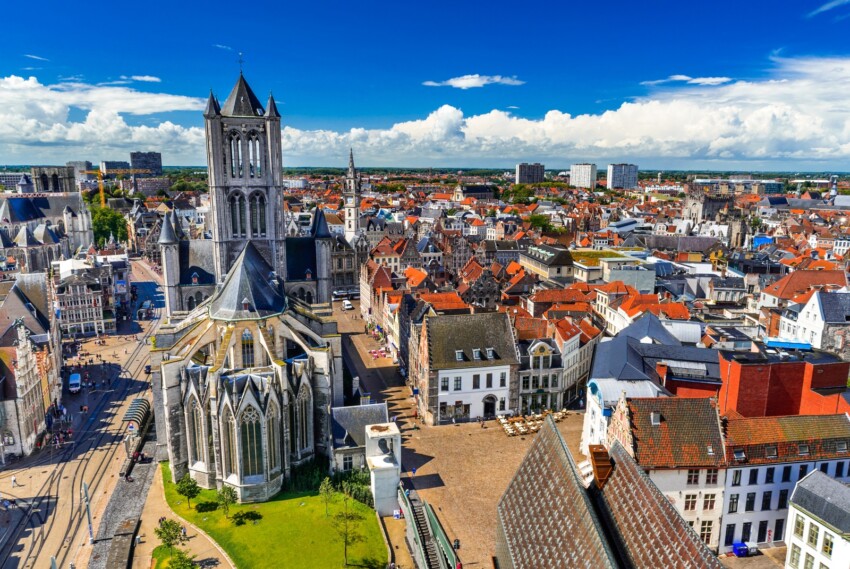
A proud symbol of the city’s independence is Ghent’s tall belfry, the Belfry, which stands beside the Cloth Hall and is one of 3 towers dominating the historic centre alongside Ghent Cathedral and Saint Nicholas Church.
The belfry, standing 91 metres high and topped with a gilded copper weathervane in the shape of a dragon, was built between 1313 and 1380 as a watchtower.
Added to the UNESCO World Heritage list in 1999 together with 23 other Flemish belfries and 6 in Wallonia, the Belfry boasts a wonderful clock mechanism. On the first and second floors of the tower is the belfry museum, while from the fourth floor, accessible by lift, you can enjoy a splendid panoramic view of Ghent.
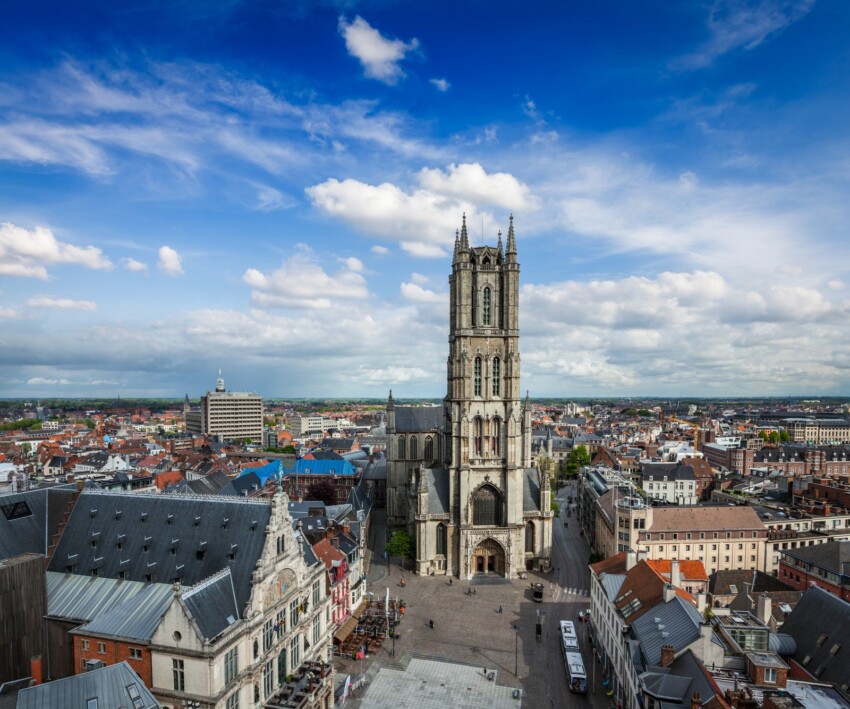
St Bavo’s Cathedral, the Sint Baafskathedraal, is located behind the Belfry in the heart of Ghent.
This imposing stone building is the result of centuries of work: the first records of the Chapel of St John the Baptist date from 942, traces of a subsequent Romanesque church are still visible in the crypt, but work continued until the mid-16th century when it acquired its present appearance.
The rich Baroque interior, stained-glass windows, numerous artworks including a large canvas by Rubens and the vaults are all noteworthy. Of particular interest is the altarpiece, the Adoration of the Mystic Lamb, painted in 1432 by a renowned painter of the Flemish Primitives school.
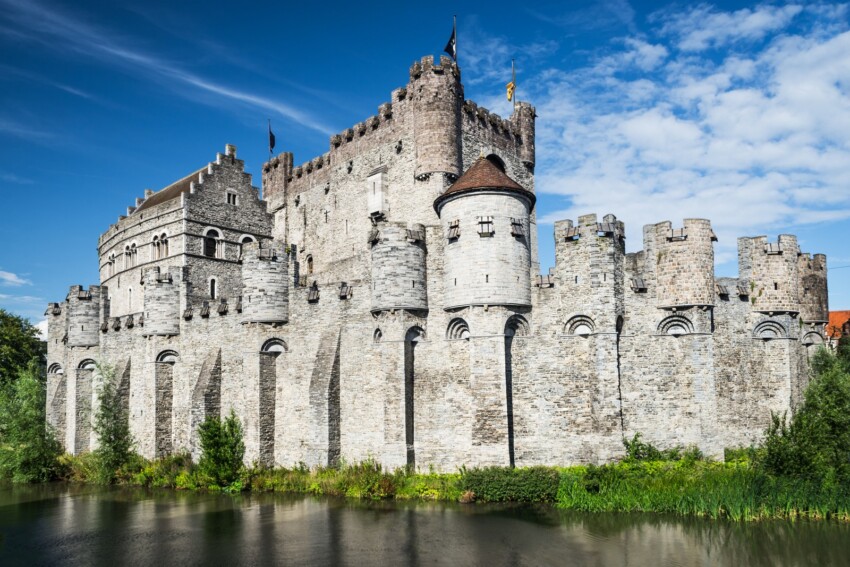
The Castle of the Counts of Flanders, Gravensteen, stands in the centre of Ghent and impresses with its majesty.
Built in the style of Crusader fortresses in Syria in 1180 by Philip of Alsace, at the confluence of the Leie and Schelda rivers, on the remains of an earlier 9th-century castle, the castle is a striking fortified stone building complete with moat, turrets and arrow slits.
The keep stands at the centre—a powerful 30-metre tower surrounded by a defensive wall with 24 turrets and a fortified entrance gateway.
The Patershol neighbourhood is the medieval heart of Ghent. The quarter is bordered by Lange Steenstraat, Grauwpoort, Sluizeken, Kraanlei and Geldmunt.
Charming restaurants line the maze of winding cobbled streets in the neighbourhood, often housed in historic palaces that were once the homes of wealthy merchants.
Worth visiting are the Carmelite Convent, dating from 1329 and now used as an exhibition space, and the orphanage, built in 1363, now a delightful café.
Werregarenstraat is an open-air art gallery, not far from the café and restaurant area of Vrijdagmarkt, in central Ghent.
In this narrow alley, street artists express their creativity by creating graffiti and murals. The works are executed by talented artists who don’t deface historic buildings but instead adorn the city so much so that the tourist board has turned street art into a walking tour.
Among the artists featured are Roa, Resto, Jamz, Cum Collective, Chase, Jasta, Pest, Pointdextr, Fixit, De Papzakken and Strook.
The Sint-Pietersabdij building is a former Benedictine abbey in central Ghent, now a cultural centre where art exhibitions are organised.
Founded in the 7th century, the abbey formed the nucleus around which the city developed. Although transformed into a barracks during the French Revolution, it retains several notable features such as the frescoed ceiling of the refectory. The abbey buildings bear witness to the city’s diverse architectural periods: notable elements in Romanesque, Gothic, Renaissance and Baroque styles are evident.
The Abbey Gardens, cultivated with vines, are worth a visit.
Ghent boasts 3 béguinages, Begijnhoven in Flemish, 12th-century communities of lay sisters—often wealthy widows seeking protection and security after losing husbands in the Crusades to the Holy Land—who could retain their property.
These special late medieval urban settlements are found only in the Netherlands and Wallonia. In Ghent you’ll find the Oude Begijnhof, unenclosed, the Klein Begijnhof, dating from 1235, and the Groot Begijnhof, the most modern of the three.
These self-sufficient houses, built on the city’s outskirts around a garden and church, were surrounded by a protective wall and represent a blend of religious and Flemish architecture. In the 16th century, with the rise of Protestantism in the Netherlands, most béguinages were destroyed.
The Groot Begijnhof and Klein Begijnhof are included on the UNESCO World Heritage List.
SMAK, the Stedelijk Museum voor Actuele Kunst, is a contemporary art museum in Ghent, located in the city’s artistic district.
Housed in the historic Floraliënpaleis, SMAK traces artistic development from 1950 to the present, placing the region’s art at its centre, making it the most important in Flanders.
Opened to the public in 1999, the permanent collection contains over 2,000 works representing the Cobra, Pop Art, Minimal Art, Conceptual Art and Arte Povera movements, featuring masterpieces by Francis Bacon and Ilya Kabakov.
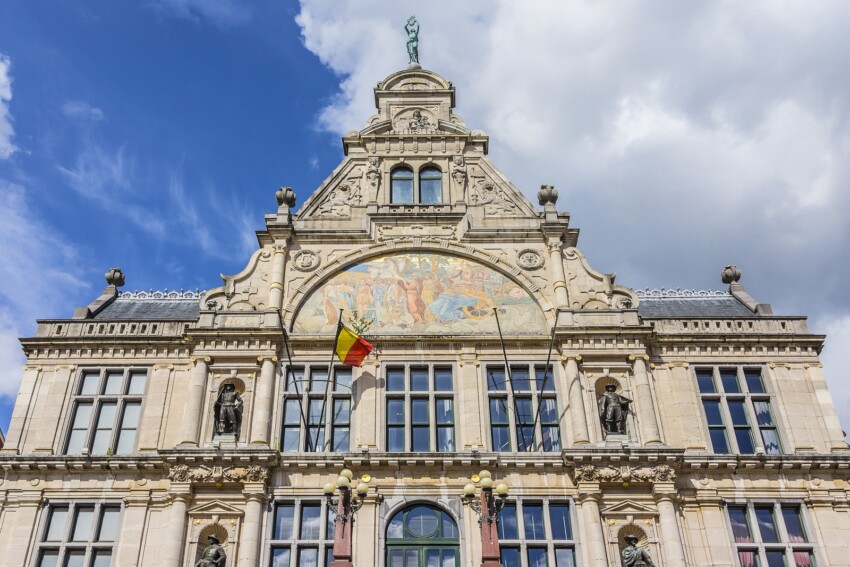
Built in 1404 as a meat market, the Groot Vleeshuis stands in central Ghent beside the Groentenmarkt, the vegetable market, and is the ideal place to sample the finest offerings of Belgian gastronomy.
Today transformed into a modern market with 40 stalls selling artisanal products from Flanders, between 1542 and 1543 it housed 16 tripe shops occupying the south-eastern side of this low structure, originally built of wood.
Inside Groot Vleeshuis you’ll find excellent local beers, cider, cheeses, exceptional meat and can discover Flemish cuisine.
In the following map you can see the location of the main places of interest mentioned in this article.
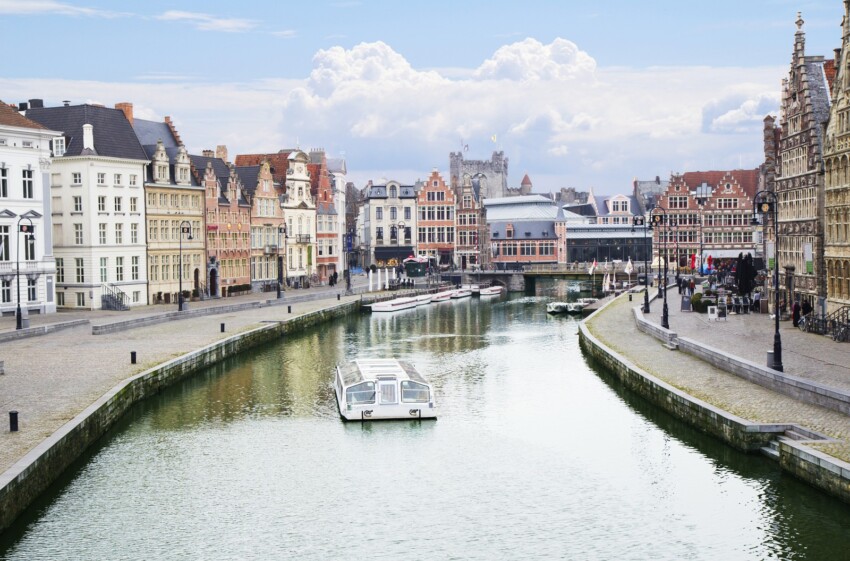
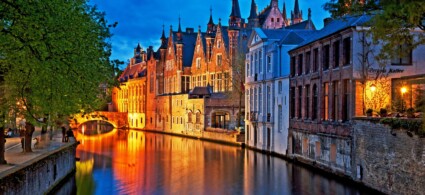
To truly appreciate Ghent’s beauty, treat yourself to a boat trip along the canals that wind through its medieval historic centre.
Experience over 1,000 years of the city’s history aboard small electric boats. Discover St Bavo’s Cathedral, Ghent’s Belfry, St Nicholas Church, the old guild houses built by bargemen, masons and grain measurers, the fish market facing the magnificent Town Hall, the béguinages and the old harbour with merchant houses.
You can also combine your cruise with some guided tours and a chocolate tour. Prices are very reasonable.
Discover Ghent through the eyes of expert guides who will take you on a tour of the city's hidden treasures. Participating in a free tour will allow you to capture the true essence of Ghent.
The free tours are a viable alternative to traditional guided tours. They work like this: participation is free and at the end of the visit you can leave a tip at your discretion. Below you will find our favourite free tour, otherwise you can see the full list by visiting this page.
From Brussels, Bruges and Ghent are the perfect destinations for a day excursion: both reachable in less than an hour by train, they pack canals, medieval architecture and gastronomy worth the journey into a few square kilometres. To visit them properly without wasting time on maps and navigation, the ideal solution is to book an organised guided tour: an expert guide takes you to the key sights, shares stories and details you’d struggle to find alone, and leaves you free time for a traditional meal or independent wandering.
If you’re in Ghent for a weekend, we’ve prepared an itinerary covering the must-see attractions and activities. Remember: to admire the city from a different perspective, treat yourself to a mini cruise along its canals, especially at dusk when the towers and gables of historic palaces take on unique hues.
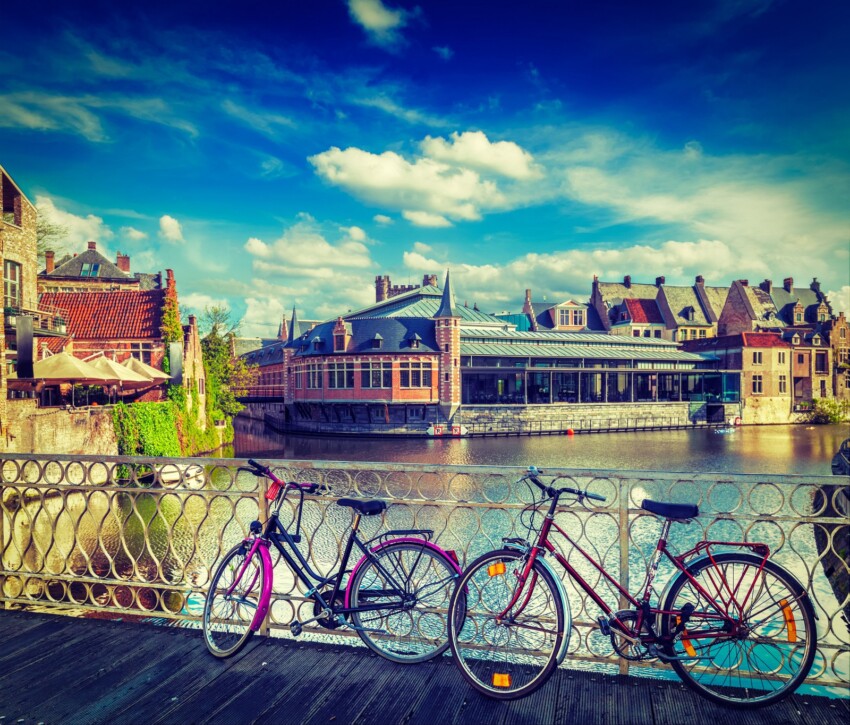
Ghent’s historic centre is completely pedestrianised, which already makes it a child-friendly city where younger visitors can move about more freely.
Explore Ghent’s beautiful Flemish architecture by bicycle or hop aboard one of the boats that reveal the city from a new perspective: Ghent sits at the confluence of two rivers and numerous canals cross the historic centre, creating unique vistas thanks to ancient bridges and centuries-old houses overlooking them.
Gravensteen Castle, in central Ghent, is one of the places children will love most. Inside you’ll also find the Torture Museum.
The Museum voor schone Kunsten has been voted the best museum for children and every Saturday offers workshops for younger visitors while adults explore the gallery.
Ghent is known for its outdoor markets, mostly held at weekends, where you can hunt for vintage toys.
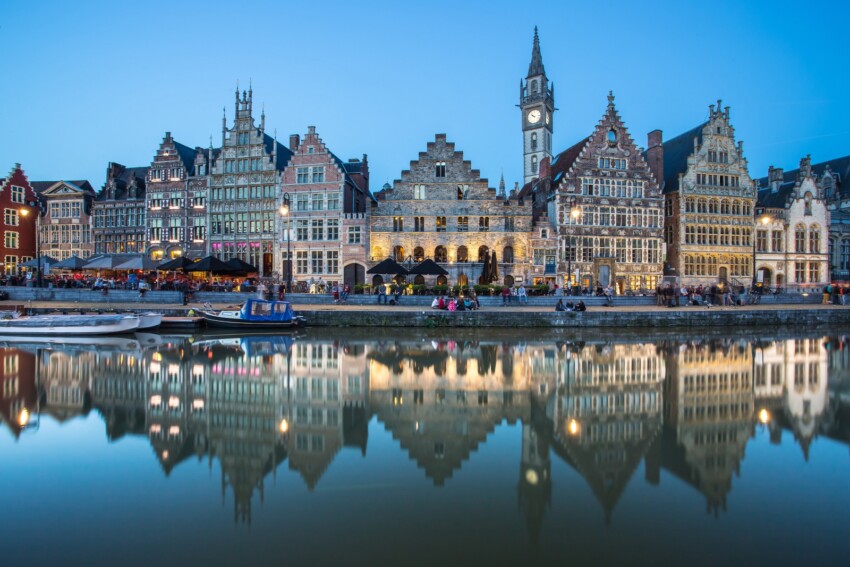
Among Europe’s most captivating cities, Ghent is a wonderful place to stay.
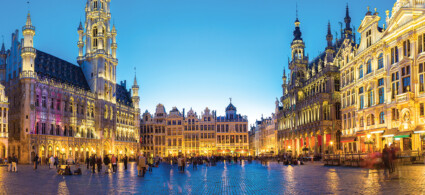
High-end accommodation can be found near the three central squares, dominated by the Belfry and two imposing churches, and along the canals.
Dotted with charming restaurants, Patershol is one of the most popular areas to stay: along its maze of winding cobbled streets, magnificent historic palaces transformed into luxury residences line the way.
Book in advance as, whilst Ghent’s accommodation offer is lively and innovative, availability at properties tends to fill up quickly. Remember that Ghent has a small tourist tax for overnight stays, usually included in accommodation prices.
The city of Ghent is located halfway between Brussels and Belgium’s coast and is easily accessible by many means of transport. Brussels airport is 65 kilometres from Ghent.
In addition to excellent train connections, the city’s main station is Sint Pieters, located 2 kilometres from the centre. Ghent is easily reachable by bicycle via the LF-routes cycle paths.
What's the weather at Ghent? Below are the temperatures and the weather forecast at Ghent for the next few days.
 Hotel
Hotel 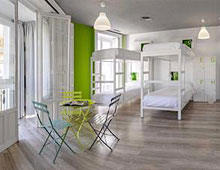 Budget accommodations
 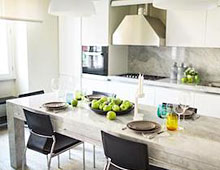 Apartments
  Family Hotel
 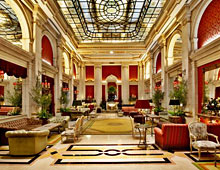 Luxury Hotel