pentahotel Leuven
Leuven - Alfons Smetsplein 7
Book now
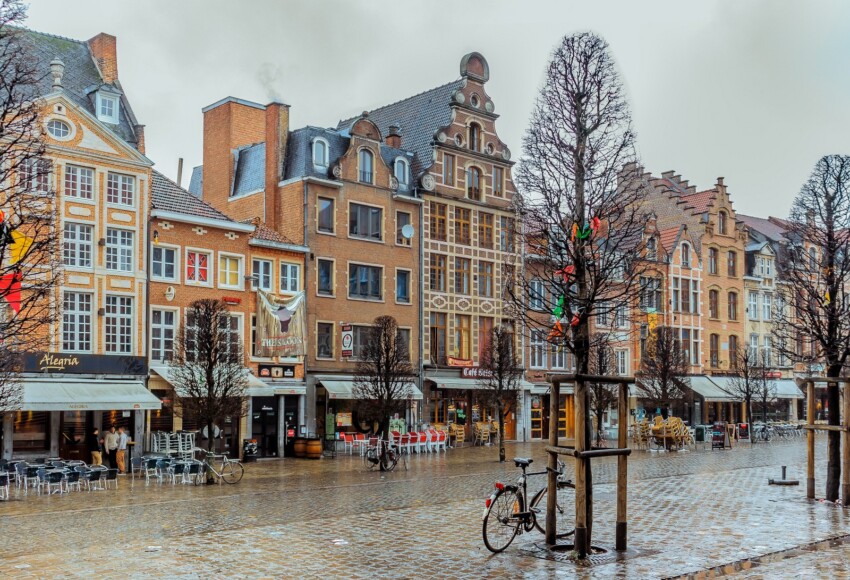
There are at least three excellent reasons to visit Leuven (Louvain in French and Leuven in Dutch), a vibrant city just twenty minutes by train from Brussels.
First, it is home to Flanders‘ oldest university, founded in the fifteenth century. The history and present-day character of Leuven are inextricably linked to this prestigious cultural institution.
Second, it is a major hub of beer production in Belgium. This is where the international giant InBev is headquartered – the company owns some of the world’s most famous beer brands, including Stella Artois (a blonde beer continuously produced in Leuven), Leffe, Hoegaarden and many others, not only Belgian. If industrial beers aren’t your cup of tea, you can visit local microbreweries or attend one of Leuven’s celebrated beer events, which attract hundreds of producers.
The third reason to visit Leuven is that it’s a city bursting with cultural, historical and scenic attractions. You can explore the picturesque centre in a day, but you’ll want more time to visit the churches, museums, parks, breweries and more. And you won’t want to miss the lively evening atmosphere, when Leuven’s pubs fill with locals, students and tourists gathered for a chat over a pint of beer. That would be a real shame!
Yes, you can visit Leuven on a day trip from Brussels, but it’s worth staying longer to make the most of this exciting city’s many attractions.
Historic palaces, a prestigious university, magnificent churches, original museums, distinctive neighbourhoods, verdant parks, panoramic viewpoints, breweries and even a quirky contemporary art installation – there’s an incredible array of things to see in Leuven! Here are the top attractions.
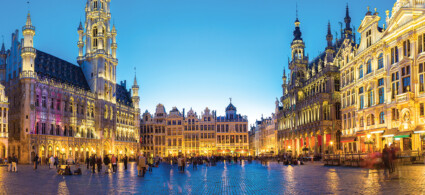
Like Brussels’ Grand Place, Leuven’s main square (Grote Markt in Dutch) is lined with magnificent historic buildings, but its fame rests on something quite different.
Leuven’s Grand Place is known as “the world’s longest bar” – a nickname it earned from the 45 bars that line its perimeter. Follow the locals and visiting Erasmus students: spend blissful hours at leisure enjoying excellent Belgian beer at one of the square’s many outdoor café tables.
Before you settle in for a drink, look out for the Kotmadam statue – an affectionate tribute to the women who once rented rooms to students.
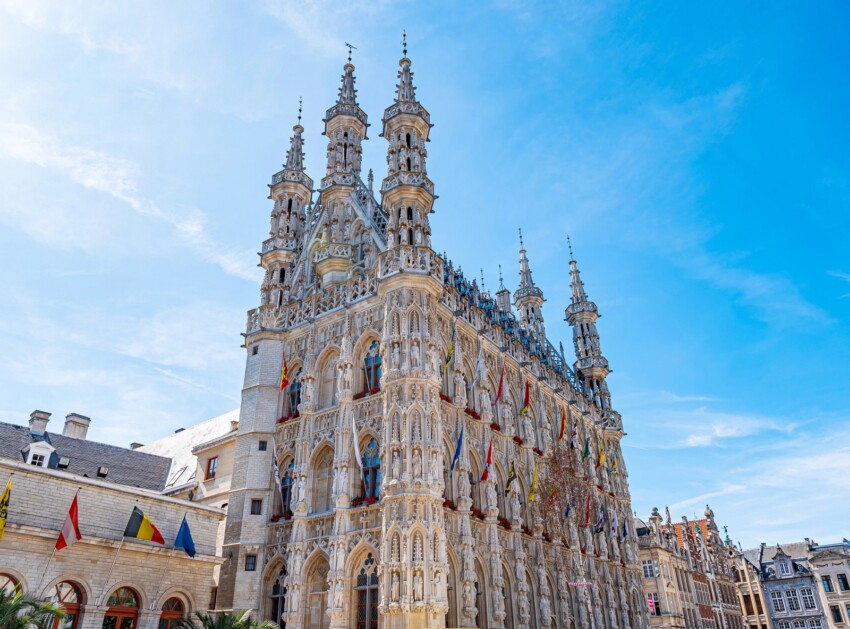
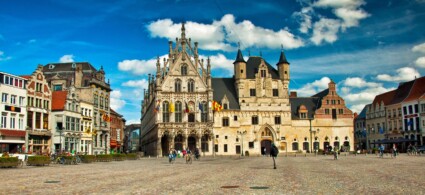
Among the Grand Place’s historic buildings, the Town Hall (Stadhuis) is undoubtedly the finest. This architectural masterpiece is the city’s true pride – even more so than its historic university and celebrated breweries.
This extraordinary late-Gothic building, constructed in the fifteenth century, is instantly recognisable by its façade, which is entirely decorated with 236 statues honouring important figures in the city’s history. The statues were added to the original building in 1850.
The municipal administrative offices have since relocated to a modern facility, and the historic Town Hall now serves a purely ceremonial function, allowing it to be open to the public. On a guided tour, you’ll learn the stories behind the 236 statues and explore fairy-tale rooms furnished in late nineteenth-century style.
The beating heart of city life and Leuven’s most famous tourist attraction is KU Leuven (Katholieke Universiteit Leuven), a prestigious institution that today has tens of thousands of students and buildings spread throughout the city and its surroundings – the local economy revolves around it.
One of Leuven’s most beautiful university buildings is the magnificent library, with its Renaissance-style façades dominated by an impressive belfry tower standing over 70 metres high.
You can visit the historic reading room, a temple to learning with a warm, welcoming atmosphere, complete with wooden floors and shelves – you’ll feel an irresistible urge to pick up a book and start reading! Beyond the library, you can also visit the belfry tower and climb to the top to enjoy wonderful panoramic views.
Another university venue open to the public is the Aula Magna (University Hall). Originally a fabric market, the university commandeered it shortly after its opening, and it’s still used today for official ceremonies.
It houses a small university museum and souvenir shop, but what tourists most appreciate is the charming bar tucked between the stone vaults of these historic rooms.
Leuven’s most curious attraction is the Totem, a contemporary art installation by artist Jan Fabre, unveiled in 2004 to celebrate the university’s 575th anniversary.
After so many historic and architectural wonders, you’ll be surprised to see a giant green beetle clinging to an enormous steel needle 75 metres tall. The work appears even more surreal set on a historic square, with a magnificent palazzo as its backdrop.
The work’s meaning is debated: some see the insect as recalling a precision mechanism, making the totem a tribute to science and technology; others interpret the beetle clinging to a needle as representing the fragility of life.
Whatever its significance, the totem’s image perfectly encapsulates the essence of a city that is learned yet vibrant and ironic – like Leuven.
Perfect for a pleasant city stroll is Leuven’s great beginage, a city-within-a-city that was once home to closed communities of unmarried or widowed women who chose not to become nuns.
Today it’s a charming neighbourhood of cobbled streets, courtyards, gardens and parks lined with typical cottages built of red brick and sandstone, now home mostly to students and academics.
The area is crossed by the Dyle river, spanned by numerous bridges that add to the fairy-tale atmosphere of this most distinctive place.
Leuven’s most interesting museum is Museum M, within easy walking distance of the university library. It’s an eclectic museum that began as a collection of curiosities and now houses pieces that juxtapose past and present – Flemish masterworks alongside a selection of Belgian art from 1945 to the present day.
The museum also functions as an active cultural centre, regularly organising temporary exhibitions and workshops.
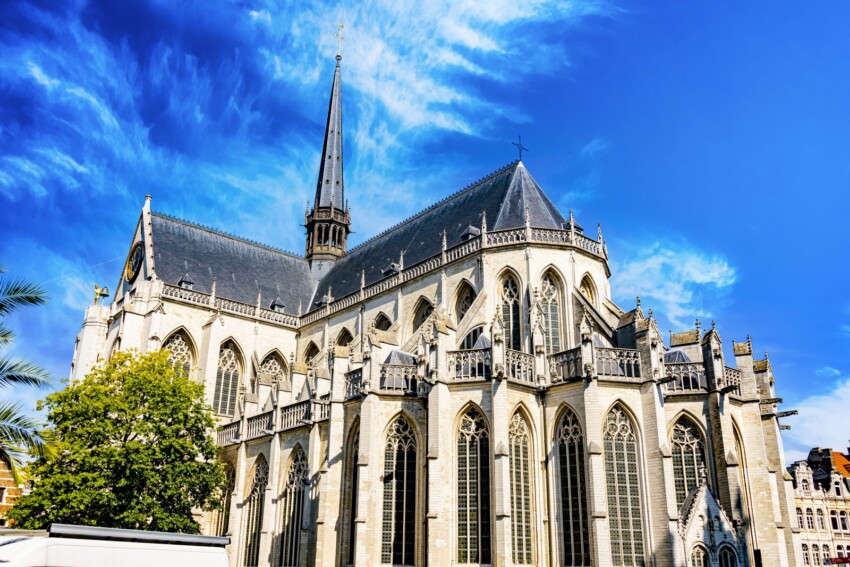
Leuven’s finest religious building is St Peter’s Collegiate Church, constructed (though never completed) in the fifteenth century.
The exterior alone is magnificent and features a belfry designated a UNESCO World Heritage site, but it’s worth stepping inside to admire Dieric Bouts’ The Last Supper, a painting of exceptional artistic merit.
PARCUM is an innovative museum dedicated to alleviating social tensions by exploring themes of interculturalism, citizenship and personal development, with a focus on contemporary issues and religious tradition. It’s a space that explicitly invites critical thinking, dialogue and creativity.
The museum is housed in a former abbey built in the twelfth century – one of the best-preserved monastic complexes in Belgium and the Netherlands.
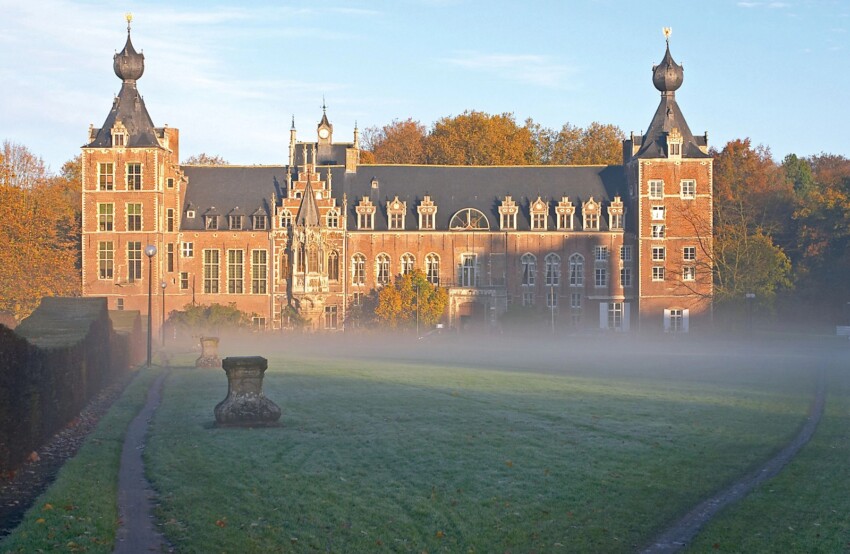
If you have more time, you can explore other attractions in the city centre or nearby:
In the following map you can see the location of the main places of interest mentioned in this article.
Leuven is known as the “beer capital” and in a country like Belgium where beer is the national drink, such a reputation is surely well deserved.
Within about 10 km of Leuven’s centre, you’ll find five must-see attractions for beer lovers, including:
All four breweries we’ve mentioned offer guided tours of their facilities and tastings, but naturally the Stella Artois brewery attracts the most visitors.
The world’s most famous Belgian pilsner has been produced in Leuven since 1926. Production now takes place at an industrial facility about 15 minutes from the historic centre, accessible via guided tours on weekends; weekday visits are available for pre-booked groups only. Tickets sell out quickly, so it’s advisable to book online.
Don’t expect picturesque cellars with stone vaults or charmingly antiquated production lines: the tour takes place largely in ultra-modern visitor facilities equipped with interactive installations. At the end of your tour, you’ll enjoy a well-deserved pint of Stella Artois.
If you’re a beer enthusiast, the best time to visit Leuven is April, when three out of four weekends are dedicated to this bubbly beverage.
Each of the three weekends hosts a different event, culminating in the Zythos Beer Festival, one of Europe’s most important beer festivals. Throughout the month, smaller satellite events, tastings and themed tourist packages are organised.
Being a young city with a high student population, Leuven offers a wide choice of affordable accommodation, ranging from hostels to well-maintained two and three-star hotels.
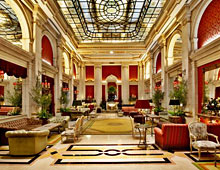
Those seeking more comfort can choose from hotels operated by international chains catering to business travellers, or modern holiday apartments. For something more romantic, a charming bed and breakfast in a traditional house is ideal. For more information on where to stay in Belgium, consult our guide.
Leuven is just 33 km from Brussels city centre. The quickest and most economical way to reach Leuven is to fly to Brussels Airport or Charleroi.
The former is closer, with a direct train connection to Leuven in just 15 minutes. From Charleroi Airport, you’ll need to first reach Charleroi South station, then take a train to Leuven – allow around an hour and a half total.
If you’re already in Belgium, it’s easy to reach Leuven from all major cities: both rail and motorway connections are excellent. Leuven is also served by numerous national and international buses.
What's the weather at Louvain? Below are the temperatures and the weather forecast at Louvain for the next few days.
 Hotel
Hotel 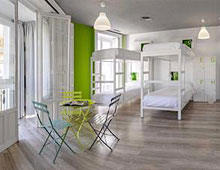 Budget accommodations
  Apartments
  Family Hotel
  Luxury Hotel