Thermae Palace
Ostend - Koningin Astridlaan 7
Book now
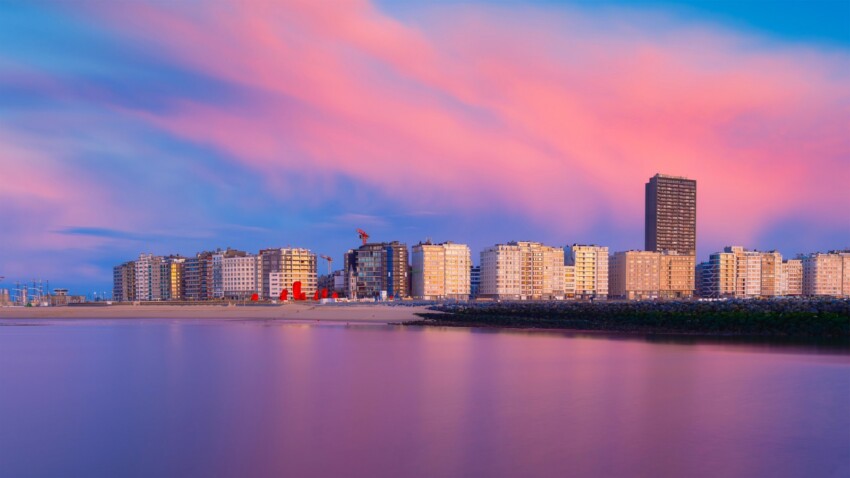
The city of Ostend (in Dutch Oostende, in French Ostende), along the coast of Flanders, is the perfect destination for those who love the smell of sea salt, the roar of the waves, the charm of the North Sea and fish-based cuisine, but also for those seeking a resort different from the usual tourist hotspots.
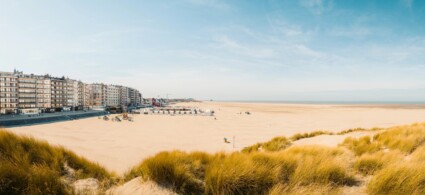
The history of Ostend, one of Belgium’s most important ports, is entirely linked to the sea, but curiously its fine sandy beach, stretching for some 10 km, is actually an artificial beach, created to contain the sea’s encroachment on the land.
Despite being artificial, it has an evocative charm and invites leisurely walks. Lying down to sunbathe may not be so pleasant due to strong winds, but if you fancy an original experience, you can do as the locals do and hire the local version of a beach lounger and parasol – a small canvas tent to shelter behind.
The seafront is lined with shops, bars and restaurants where you can enjoy local culinary specialities: Atlantic sole and tomatoes stuffed with shrimp. Street food here is also fish-based – a profusion of shrimp croquettes, spicy soups with snails, dried cod, oysters.
In the past, Ostend was the seaside resort favoured by Belgian high society, which left the city a legacy of sumptuous mansions. Today Ostend is cosmopolitan and dynamic, but retains a regal charm and a nostalgic hint of salt.
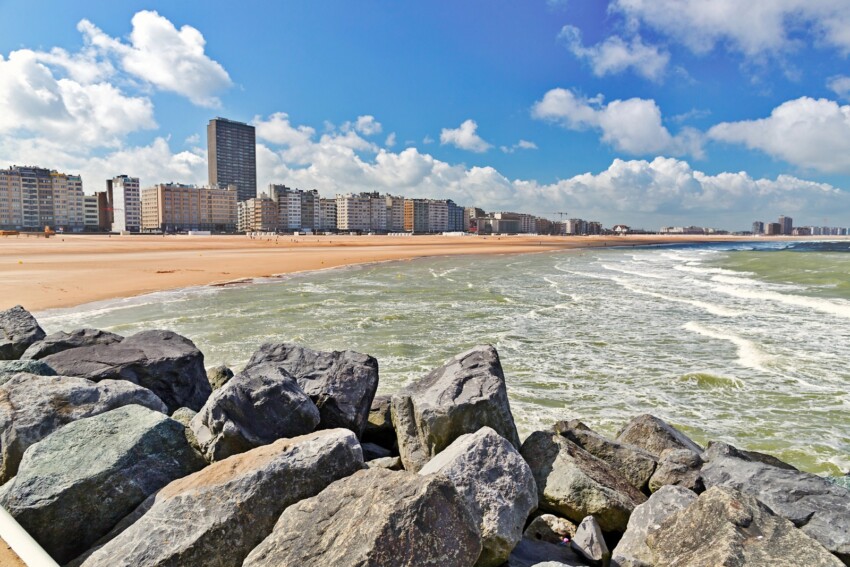
The most pleasant thing to do in Ostend is undoubtedly a walk along the Visserskaai, the quay of the urban port, flanked by an incredible number of bars, restaurants and street food stalls. Fish is unquestionably the star of the culinary offering.
Where the Visserskaai ends begins the Albert I Promenade, a spacious pedestrian avenue running parallel to the beach that is rather the beating heart of the city centre.
One of the landmark buildings of Ostend is the monumental Casino Kursaal Oostende in modernist style overlooking the Albert I Promenade, built after the Second World War.
A testament to the glorious past when Ostend was the seaside resort of the bourgeoisie, today it houses the casino with slot machines and poker, roulette and blackjack tables, plus a bar, restaurant and auditorium for concerts and shows.
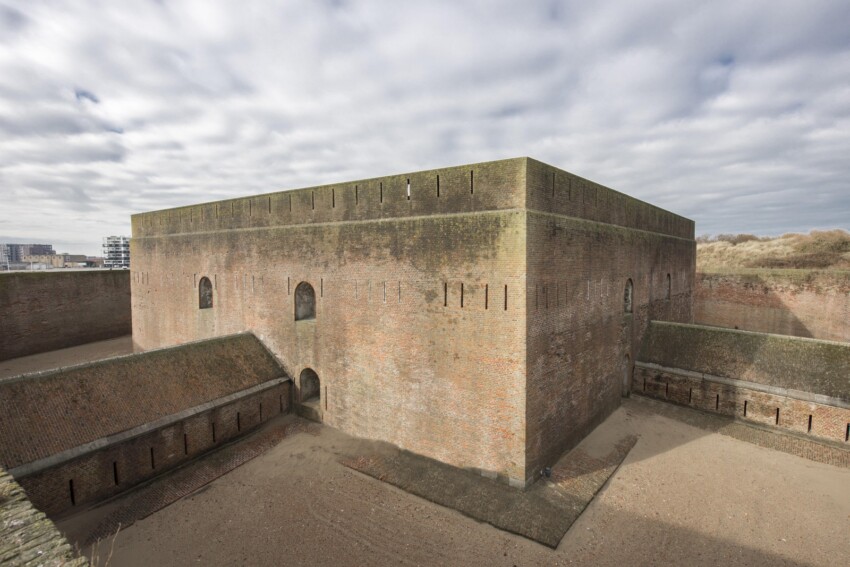
Fort Napoleon is a pentagonal defensive fortress built at the behest of Napoleon Bonaparte in 1812 to thwart a potential attack by the English. During the Second World War it was used as German artillery headquarters.
Despite the various wars, the fortress remained virtually intact and a recent restoration has brought it back to its former glory.
It is an impressive sight overall, also thanks to its strategic yet evocative position almost on the seashore, but the museum inside is not particularly interesting. You can enjoy a fine view of the fort without paying an entrance fee by having something at the fortress café.
Walking through the centre of Ostend, you are bound to come across monuments and sculptures from different eras and styles.
The most moving monument is the memorial to those lost at sea, a towering commemorative stele resembling an obelisk along the Albert I Promenade. At its summit, facing the sea, stands a statue of a sailor gazing confidently at the horizon; at the foot of the stele, on the opposite side from the sea, is a statue of a sailor in prayer beneath an enormous cross.
The quirky Rock Strangers will evoke completely different emotions – an installation by artist Arne Quinze consisting of huge orange blocks jutting from the city ground when least expected. The artist’s aim was to provoke curiosity and wonder: we think it succeeded.
Another contemporary sculpture that catches the eye is Dansende Golven (Dancing Waves) by Patrick Steen, not far from the Casino: two dancing figures by the sea whose silhouette evokes the undulating movement of the waves.
If you are passionate about contemporary art or street art, keep your eyes open as you wander through Ostend, as you will spot many other interesting works.
The city of Ostend is rich in museums, here are the ones not to miss:
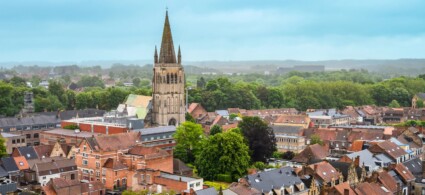
The finest church in Ostend is the Cathedral of Saints Peter and Paul, a majestic Neo-Gothic building constructed in 1907 with distinctive twin spires soaring into the city’s skyline and magnificent decorated stained glass windows.
Inside the church, behind the main altar, is the tomb of Louise-Maria, Queen of Belgium who died in Ostend. It can be visited upon request.
An original and eco-friendly way to admire the beauty of Ostend’s coast – and beyond – is the Kusstram, or Coastal Tram: a tram that runs from the town of De Panne to Knokke always along the coast for a total of approximately 70 km.
In Ostend it makes several stops and can therefore be used as a local transport, but if you have more time, spend half a day or a full day on a fascinating tram journey along the Flanders coast.
You can choose from various tickets: single journey, 1, 3 or 5 days, tram plus sightseeing tour, weekly ticket.
With over 50 hotels to choose from, you will have no difficulty finding accommodation for your stay in Ostend. The value for money is generally very good, so even if you are travelling on a tight budget, you will be able to find comfortable lodging.
The city of Ostend has an airport located just 5 km from the city centre, but unfortunately it is not served by direct flights from most countries.
It is better to take a flight to Brussels and then travel by train or with a rental car. Rail connections between Brussels and Ostend are excellent and the journey is just over an hour.
What's the weather at Ostend? Below are the temperatures and the weather forecast at Ostend for the next few days.
 Hotel
Hotel  Budget accommodations
  Apartments
  Family Hotel
  Luxury Hotel