Parc Hotel Alvisse
Luxembourg - 120 Route d'Echternach
Book now
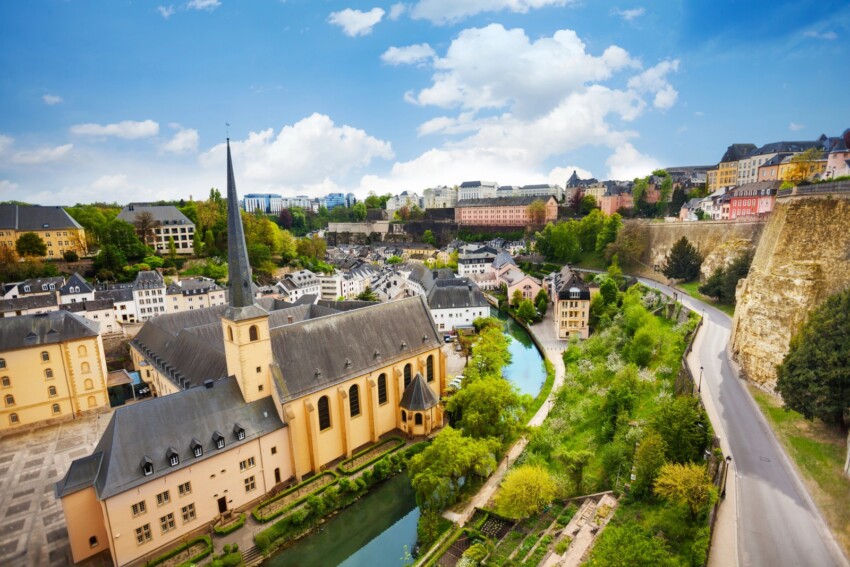
Luxembourg is one of Europe’s smallest countries, yet it contains a surprising variety of landscapes, history and culture. Nestled between Belgium, France and Germany, the Grand Duchy spans just 2,586 square kilometres, but its geopolitical, economic and institutional influence far outweighs its size. Home to major European Union institutions — including the Court of Justice and the Court of Auditors — Luxembourg has been one of the continent’s most significant financial centres for decades.
The territory divides into two major natural areas: the Ösling to the north, where the wooded hills of the Ardennes slope gently down towards silent valleys and medieval villages; and the Gutland to the south, a flatter, more fertile region dominated by the capital and the Moselle valley. The landscape is marked by castles, abbeys, rivers and forests in continuous succession, offering breathtaking views in every season.
The capital, Luxembourg City, inscribed on the UNESCO World Heritage List in 1994 for its historic centre and imposing underground casemates, is the beating heart of the country. Yet the Grand Duchy deserves exploration well beyond its urban boundaries: along the Moselle, quality white wines are produced; in the northern Ardennes you’ll find some of the best-preserved castles in the Benelux; and small villages like Vianden and Echternach offer an authentic, unspoilt medieval atmosphere. For those arriving from nearby Belgium, Luxembourg is a natural and often surprising stop.
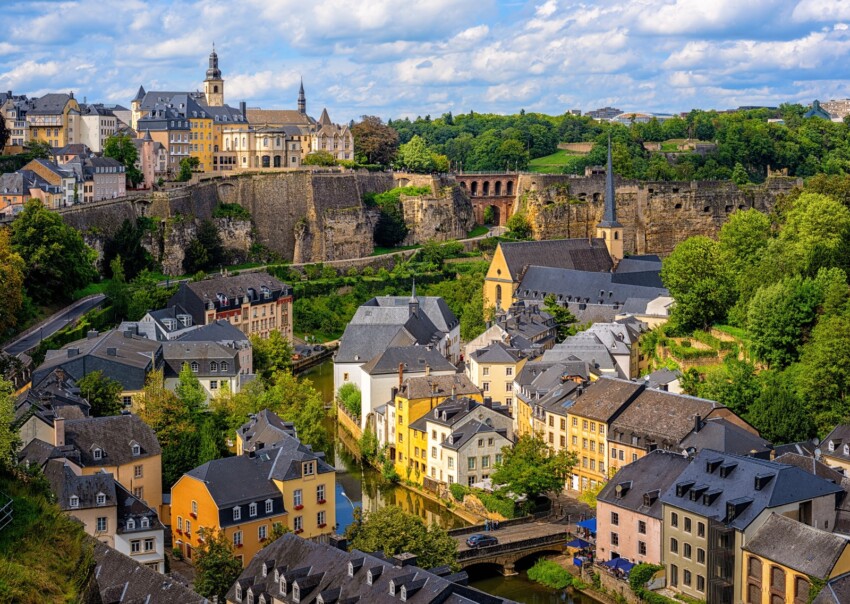
Exploring Luxembourg means moving between vastly different eras and landscapes, often just kilometres apart. The capital is the inevitable starting point: its UNESCO-listed historic centre, carved by deep valleys and scenic routes such as the celebrated Chemin de la Corniche, offers a sequence of monuments, museums and medieval quarters of considerable impact. The Casemates du Bock, a labyrinth of underground galleries hewn from rock in the 17th and 18th centuries, tell the country’s military history with a tangibility rarely found elsewhere. The Cathedral of Notre-Dame, the Grand Ducal Palace and the medieval district of Grund — which descends seventy metres below the plateau, along the banks of the Alzette — complete a historic centre of rare quality. The MUDAM, the museum of modern art designed by Ieoh Ming Pei on the Plateau du Kirchberg, is instead a symbol of contemporary Luxembourg.
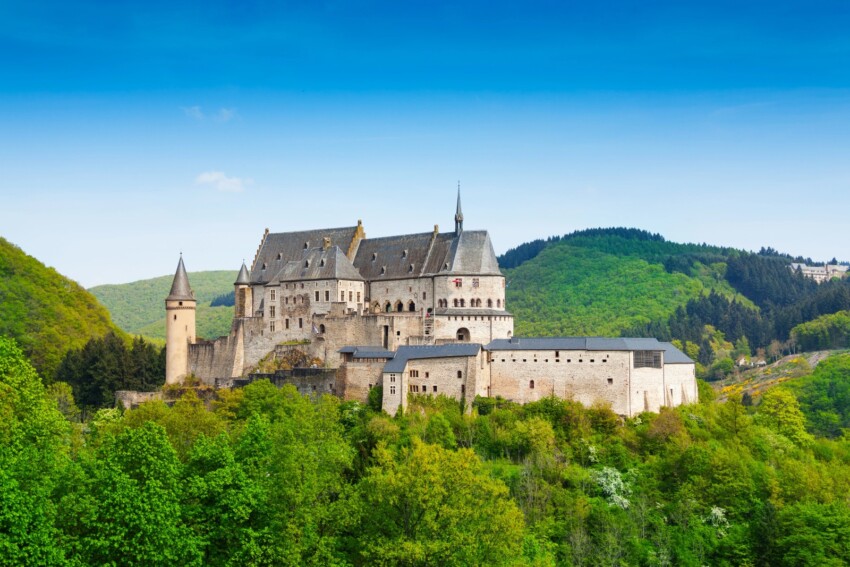
Moving north, the village of Vianden is probably the country’s most photographed destination: its medieval castle perched above the Our valley is one of the best-preserved in the entire Benelux. Nearby, Clervaux houses the celebrated photographic exhibition The Family of Man by Edward Steichen, inscribed in UNESCO’s Memory of the World register, within a neo-Gothic castle surrounded by Ardennes forests. The city of Echternach, the oldest in the country, is the gateway to Little Switzerland, a protected natural area with spectacular rock formations and trekking trails through oak forests.
To the east, along the border with Germany, the Luxembourg Moselle valley is the realm of viticulture: the villages of Remich, Grevenmacher and Wormeldange produce Riesling, Pinot Gris and Crémant de Luxembourg which can be tasted directly in cellars open to the public, overlooking the river. The village of Schengen, famous for the agreement on free movement signed in 1985 aboard the ship Princesse Marie-Astrid anchored on the riverbank, ideally concludes a journey through a country capable of surprising you at every turn.
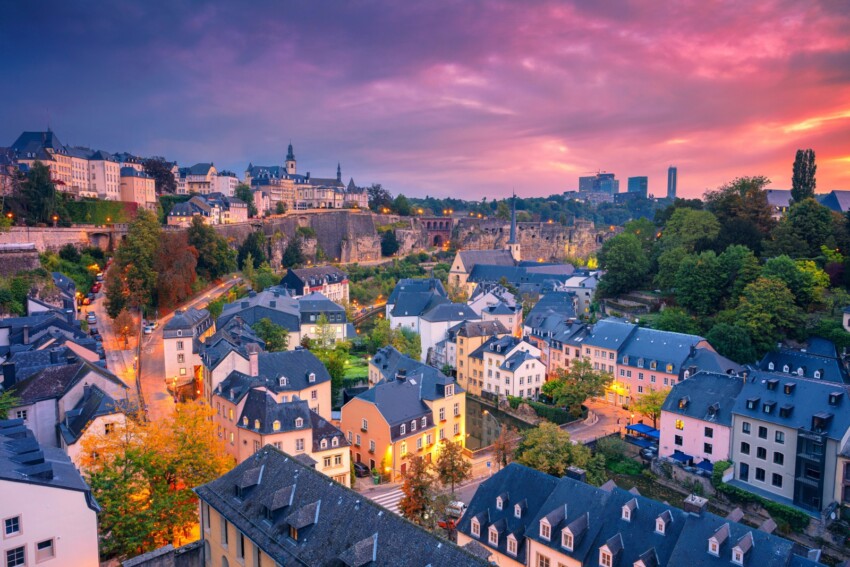
The capital, Luxembourg City, concentrates most of the country’s accommodation offer. Staying in the historic centre, between Place d’Armes and the Vieille Ville, is the most convenient choice for exploring the main monuments on foot: boutique hotels and flats with views over the main squares guarantee a privileged position, with prices in line with a major European capital. Those seeking a more intimate and authentic atmosphere will find some independent and charming solutions in the Grund district, immersed in the medieval quiet of the valley floor.
In the modern Kirchberg district, home to European institutions, business-class hotels concentrate with good services and often more competitive weekend rates. The area is well connected to the historic centre by tram. In the Gare area, around the railway station, you’ll find the capital’s most economical options, convenient for those arriving by train.
Outside the capital, the villages of the Ösling and Moselle valley offer quieter, alternative accommodation: farm stays, small family hotels and holiday homes allow you to discover rural Luxembourg at a slower pace. In Vianden and Echternach the accommodation offer has grown in recent years, with establishments focusing on integration into the natural landscape. In summer, booking in advance is recommended, especially over weekends.
Luxembourg occupies a central position at the heart of the Benelux, easily accessible from across Europe. Since 2020, all public transport within the country — buses, trams and national trains — have been completely free for second-class passengers, a world first that greatly simplifies getting around once you arrive.
Findel Airport is the country’s only international terminal and is located approximately 6 kilometres east of the capital’s centre, reachable in 20–25 minutes by bus line 16, which connects the airport to the central station with stops in the city centre. The service is free, like all Luxembourg public transport.
Brussels–Zaventem Airport is approximately 220 kilometres from Luxembourg City, reachable by car in about 2 hours 15 minutes along the E411 motorway. Several long-distance bus operators connect the terminal directly to the Luxembourg capital, with journey times ranging from 2.5 to 3 hours. You can also combine the airport shuttle with the train from Brussels Midi to Luxembourg Station.
Charleroi Airport, used by many budget airlines, is approximately 170 kilometres from Luxembourg City. By car, the journey on the E411 motorway takes around 1 hour 45 minutes. Some bus operators connect the terminal directly to the Luxembourg capital with regular departures during peak hours. For those arriving from Charleroi, it’s often the fastest and most economical solution for reaching the Grand Duchy.
Luxembourg Station offers direct connections to Brussels (approximately 3 hours), Paris Gare de l’Est (approximately 2 hours 10 minutes by TGV) and Frankfurt (approximately 3 hours). From Belgium, the most heavily used route is Brussels Midi – Luxembourg, with regular departures throughout the day: the journey crosses Wallonia, passing through Namur and Liège, with particularly scenic views in spring and autumn.
Luxembourg’s telephone country code is +352: to call a Luxembourg number from abroad, dial the international code 00352 followed by the recipient’s number. Luxembourg landline numbers do not have a separate area code.
Luxembourg observes GMT+1 (CET – Central European Time), with daylight saving time from March to October (GMT+2, CEST). This time zone is the same as many Central European countries including Belgium, France, Germany and Italy, so no adjustment is necessary when arriving from these countries.
Luxembourg is one of the founding members of the European Union and has been part of the eurozone since the introduction of the single currency: the euro is the official currency from 1 January 1999 for financial transactions and from 1 January 2002 for banknotes and coins.
Electrical outlets in Luxembourg use the European standard (types C and F), with voltage of 230V and frequency of 50Hz. These are the same standards used in most continental European countries, so electrical devices from the UK, Belgium, France and Germany work without adapters.
Luxembourg is located in Western Europe and is one of the continent’s smallest countries, with an area of approximately 2,586 km². It borders Belgium to the north and west, France to the south and Germany to the east. The capital, Luxembourg City, is located in the southern part of the country and is the Grand Duchy’s principal economic, political and cultural centre.
Luxembourg’s flag consists of three horizontal stripes of equal width in red, white and light blue, from top to bottom. It is often confused with the Netherlands flag, which features a darker blue. The colours derive from the heraldic coat of arms of the grand ducal house and have been in use since the 13th century.
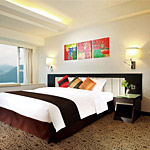
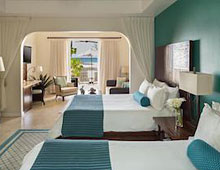 Hotel
Hotel 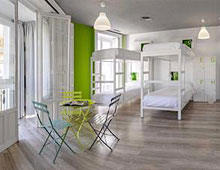 Budget accommodations
 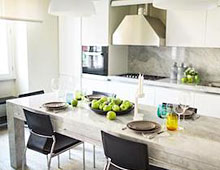 Apartments
  Family Hotel
 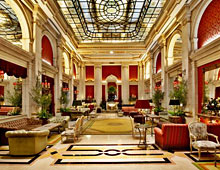 Luxury Hotel