Belgian chocolate
Melted, in tablets or pralines, Belgian chocolate is a sweet temptation. During a holiday, it's only right to indulge in the pleasure of artisan chocolate!
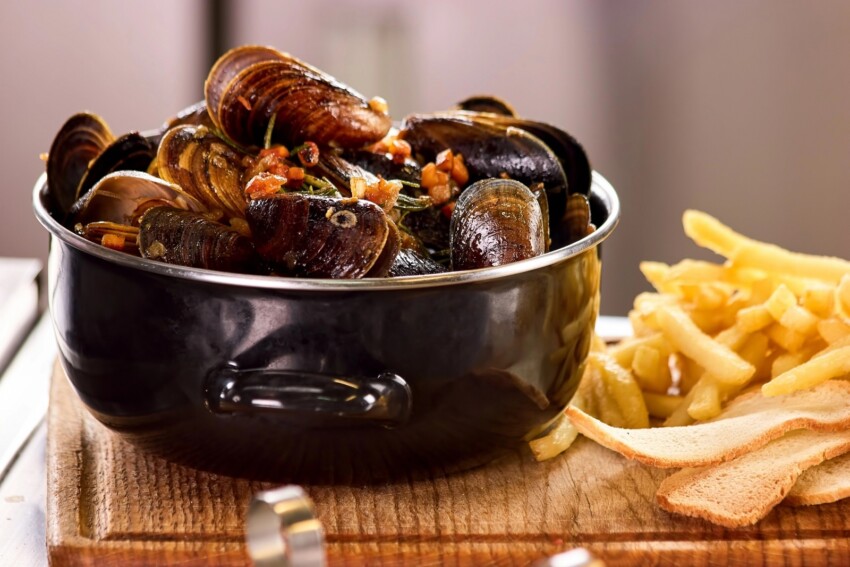
Belgian cuisine is one of Europe’s great gastronomic surprises: often overshadowed by the reputation of French cooking, with which it shares roots and techniques, it manages to express its own identity made of concrete flavours, quality ingredients and recipes born from centuries of rural and bourgeois life. Those arriving in Brussels expecting anonymous food quickly change their minds at the first plate of mussels with chips or the first bite of a freshly baked waffle. Belgium is a small country but gastronomically dense, capable of offering memorable culinary experiences in both the Michelin-starred restaurants of the capital and the provincial brasseries.
Belgian cuisine also reflects the cultural complexity of the country: the Flemish traditions of the north, closer to Dutch and German cooking, intertwine with those of Wallonia in the south, heavily influenced by French gastronomy, giving rise to a rich and varied culinary heritage. In Bruges you will order a stoofvlees with lambic, in Liège a boudin au sirop de Liège, and in both cases you will discover that Belgian food speaks with different accents but with the same substance and generosity.
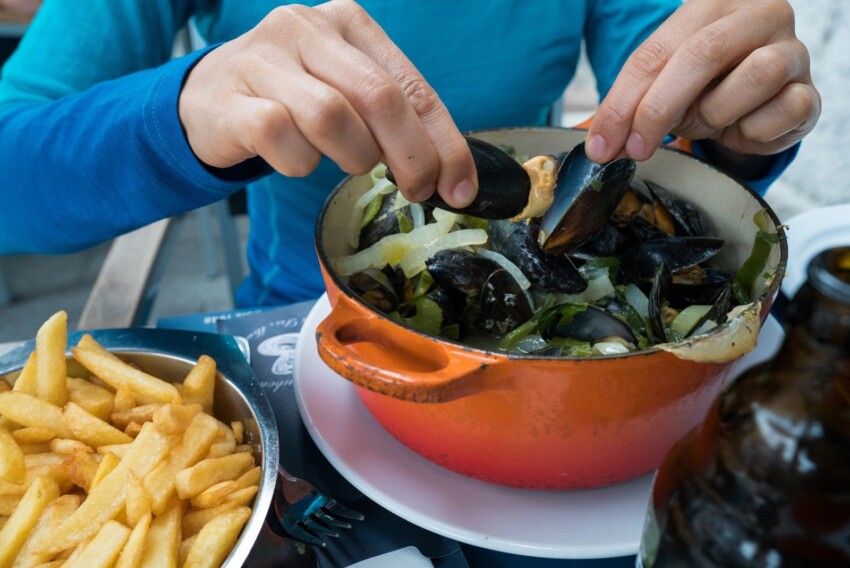
If we had to choose a single dish to symbolise Belgium, the choice would inevitably fall on moules-frites, mussels with chips. It is a combination that the Belgians have elevated to a true national institution, consumed in extraordinary quantities every year and present in almost every brasserie and restaurant in the country, from the simplest to the most refined.
Belgian mussels — actually almost always sourced from the Netherlands or Zeeland, the Dutch region bordering Belgium — are cooked in an aromatic broth made with celery, onion, butter and white wine, and served still in the cooking pan, typically made of steel or cast iron, accompanied by an abundant portion of crispy chips. The variations are numerous: moules marinière, moules à la crème, moules au vin blanc, moules au curry, moules provençale. Every brasserie guards its own recipe like a family secret.
The traditional mussel season runs from July to February, following the empirical rule of months with the letter R (September, October, November…), although nowadays industrialised production makes them available year-round. Purists, however, advise waiting until September to taste mussels at their peak quality.
Belgium proudly claims ownership of frites, chips, which according to local tradition would have been invented in Flanders in the 17th century and not in France as is often believed. Whether or not the historical dispute is settled, one thing is certain: Belgian frites are a product in their own right, different and superior to the chips found elsewhere in Europe.
The secret lies in the double frying: potatoes are fried first at moderate temperature to cook them internally, then cooled and fried a second time at high temperature to make them golden and crispy on the outside while keeping the inside soft and fluffy. The traditional frying fat is beef tallow, nowadays often replaced by vegetable oils, but still in use in the more traditional chip shops.
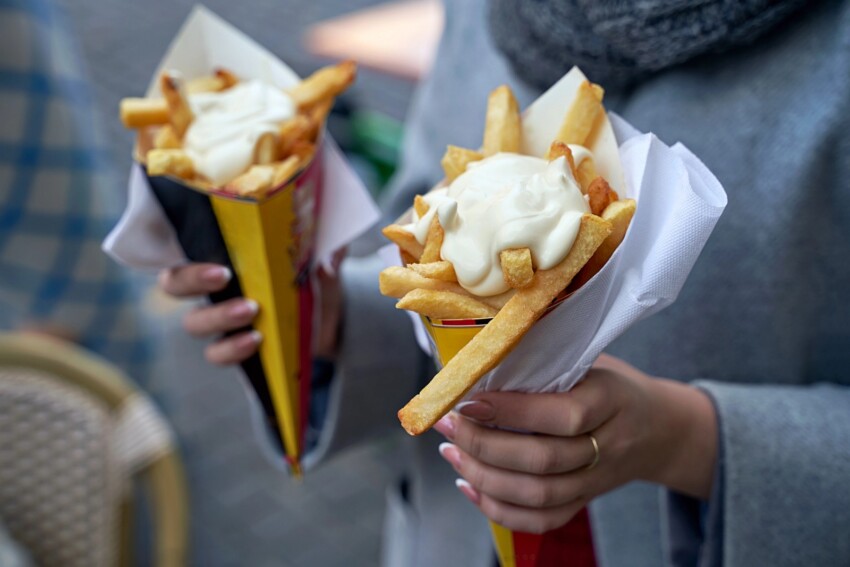
Frites are purchased from fritkots, the characteristic chip stands found in every Belgian city, and consumed in a paper cone with a generous dollop of mayonnaise — not ketchup, as Belgians are keen to point out to foreign tourists. UNESCO added Belgian fritkot culture to the list of intangible cultural heritage in 2023, a recognition that Belgians welcomed with well-deserved pride.
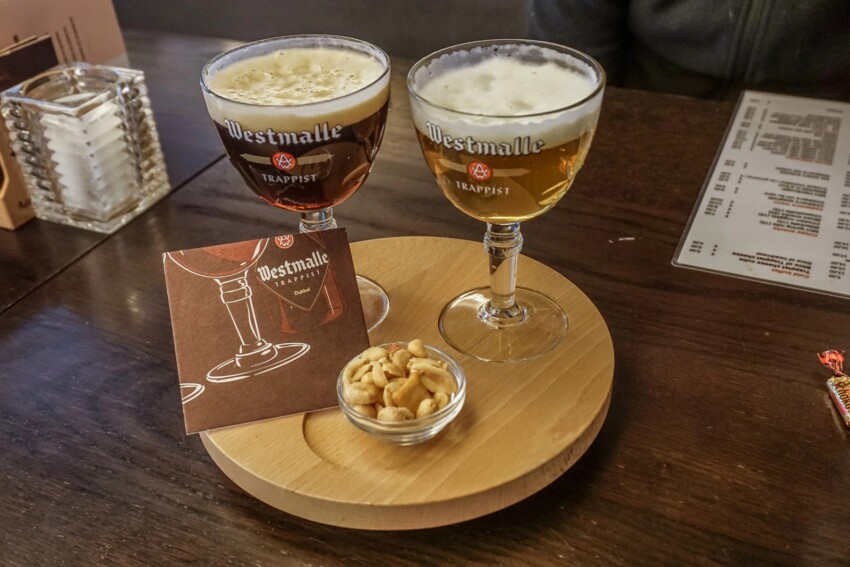
To talk about Belgian cuisine without devoting ample space to beer would be a grave error: in Belgium, beer is not simply a beverage to accompany food, but a fundamental ingredient in many traditional recipes and a cultural element recognised by UNESCO as an intangible cultural heritage of humanity since 2016. Belgium boasts over 300 active breweries and produces more than 1,500 different labels, with styles ranging from sour and fruity lambics to austere Trappists, from spiced wheat beers to summer saisons.
At the table, beer goes straight into the pot: stoofvlees (or carbonnade flamande) is a beef stew cooked slowly in dark beer, typically a brune or a Trappist, with onions, thyme, bay leaf and a slice of bread spread with mustard placed on top of the meat to bind the sauce. The result is a dish of extraordinary aromatic depth, sweet and slightly bitter at the same time, which in Flanders is traditionally served with chips and salad.
Abbey beers — produced in monasteries or according to monastic recipes — are the most celebrated internationally. The six recognised Belgian Trappist beers (Chimay, Westmalle, Rochefort, Orval, Westvleteren and Achel) are considered among the world’s finest beers. An itinerary through the abbey breweries is one of the most fascinating ways to explore rural Wallonia and Flanders.
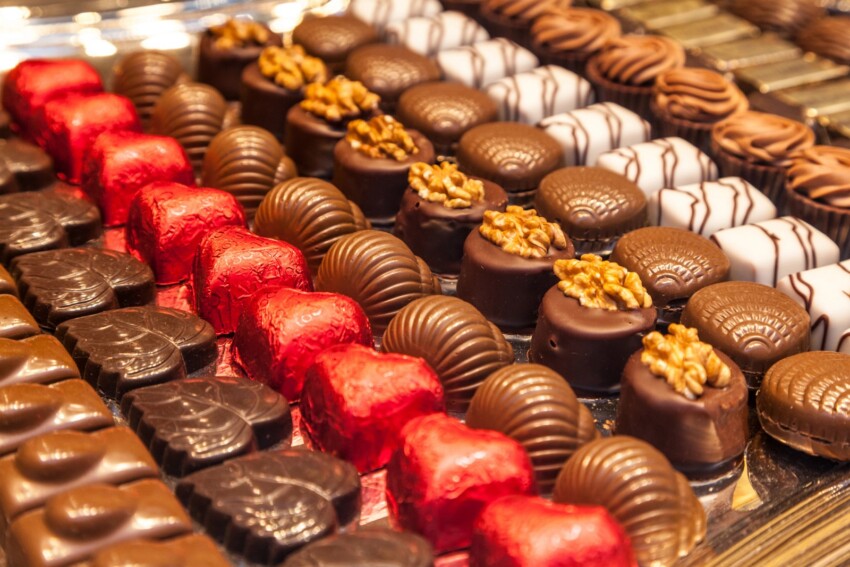
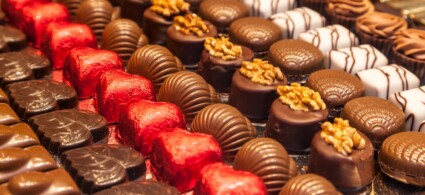
Belgian chocolate is perhaps the country’s most famous gastronomic product internationally, and its reputation is well deserved. The Belgian chocolate-making tradition dates back to the 17th century, when spices and colonial goods — including cacao — arrived at Antwerp port from the Americas. Over the centuries, Belgian maîtres chocolatiers have developed production techniques and recipes that still define world standards in the industry today.
The most representative speciality is the Belgian praline, invented in 1912 by Brussels chocolatier Jean Neuhaus: a chocolate shell filled with ganache, nougat, caramel or hazelnut paste, made in hundreds of different variations. The major Belgian brands — Neuhaus, Leonidas, Godiva, Côte d’Or, Pierre Marcolini — are distributed worldwide, but it is by purchasing directly in the boutiques of Brussels, Bruges or Antwerp that you find fresh chocolate of the day, without preservatives and at its best.
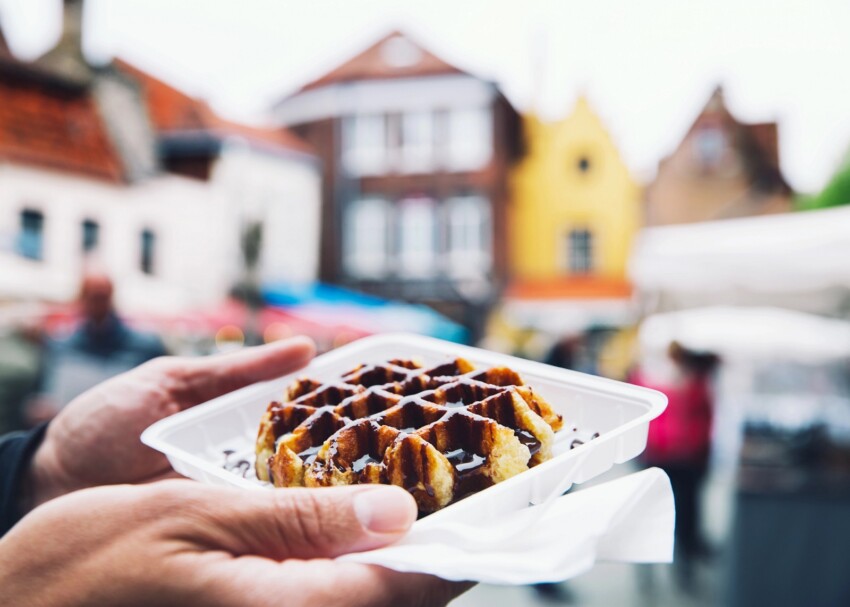
Belgian gaufres are a chapter in their own right in the history of European pastry-making. There are two main versions, both delicious and distinctly different from each other. The Brussels waffle is rectangular, light and crispy, with deep indentations that perfectly hold whipped cream, strawberries or syrup; the Liège waffle is more compact, round or oval, made with brioche dough with pearl sugar incorporated into the batter, which caramelises during cooking to create an amber and slightly sticky surface.
Both can be found at outdoor markets, fairs and in the stalls of waffle makers who populate Belgian city squares in every season. The Liège version, in particular, is considered the ultimate walking snack: eaten hot, without adding anything, letting the caramelised sugar do all the work.
Belgian baking and pastry-making have produced some specialities that deserve separate mention. The pain à la grecque — despite its name, it has nothing to do with Greece — is a rectangular cinnamon biscuit typical of Brussels, crumbly and fragrant, which is eaten for breakfast or with afternoon tea. Its origin is medieval: it was distributed to the poor by Augustinian convents in the capital, which were located near the Gracht, the canal called by a Flemish term that was later corrupted into “grecque”.
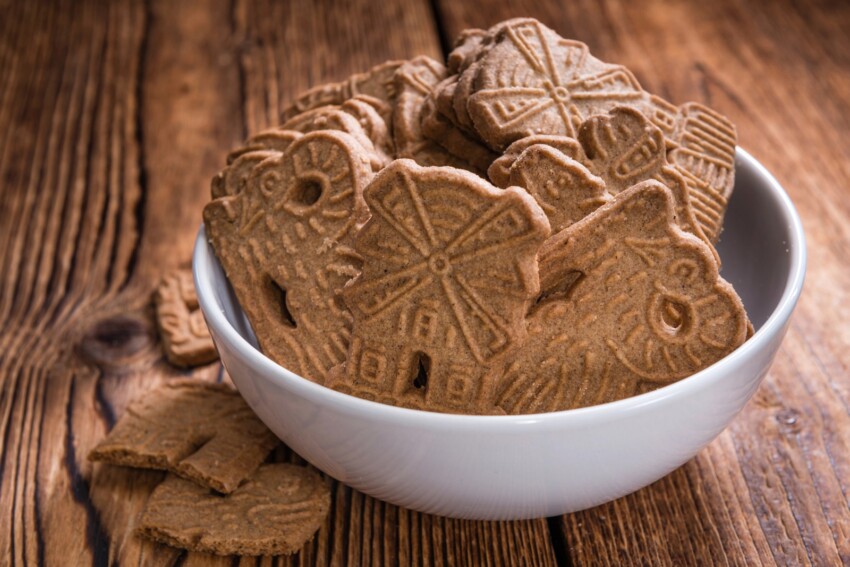
Speculoos are Belgian spiced biscuits par excellence, prepared with dough enriched with cinnamon, cloves, cardamom, nutmeg and ginger, and stamped with carved wooden moulds that depict saints, windmills and scenes of rural life. In Belgium they are eaten year-round, but their golden season is winter, particularly during the festive season. Speculoos paste — spreadable like peanut butter — has become an international gastronomic phenomenon in recent years.
The gastronomic tradition of Wallonia has its strongest symbols in the city of Liège and the inland products. Sirop de Liège is a dark and dense jam obtained from the slow cooking of apples and pears, without the addition of sugar, reduced to an almost liquorice-like concentration. It is spread on bread, accompanies cheeses, goes into traditional meat recipes and — in its most authentic version — is used to prepare boudin au sirop, a spiced black pudding served with this sweet-bitter sauce in a pairing that surprises and delights.
Walloon cuisine is also the cuisine of game: wild boar, venison, hare and pheasant are traditional ingredients on autumn and winter tables, prepared in long slow-cooked dishes with dark beer, juniper and blueberries. The brasseries of Durbuy, Bouillon and the Ardennes offer seasonal game menus that are among the most authentic gastronomic experiences in all of Belgium.
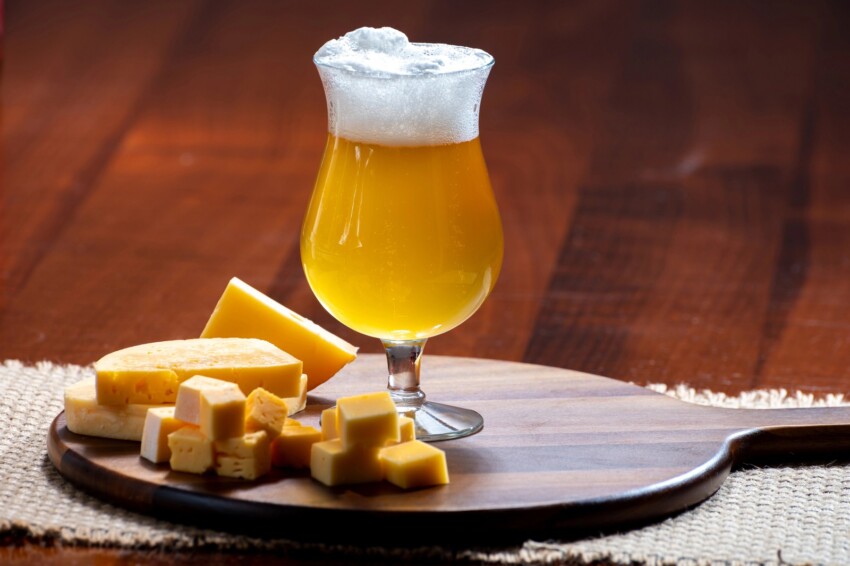
Belgium’s cheese heritage is unjustly little known to the general international public, overshadowed by its proximity to France. Yet the country produces cheeses of considerable character, many of which are linked to monastic tradition. Herve, produced in the region of the same name in Liège province, is the only Belgian cheese with protected designation of origin: soft-paste with washed rind, with a pronounced flavour and penetrating aroma, it is one of Europe’s oldest cheeses, mentioned in documents dating back to the 15th century.
Among the most appreciated abbey cheeses is Chimay, produced by the Trappist monks of the abbey of Scourmont in three versions: grand cru, à la bière and with aromatic herbs. Belgian abbey cheeses share the same artisanal philosophy with the beers of the same name: limited production, local raw materials, recipes handed down from generation to generation.
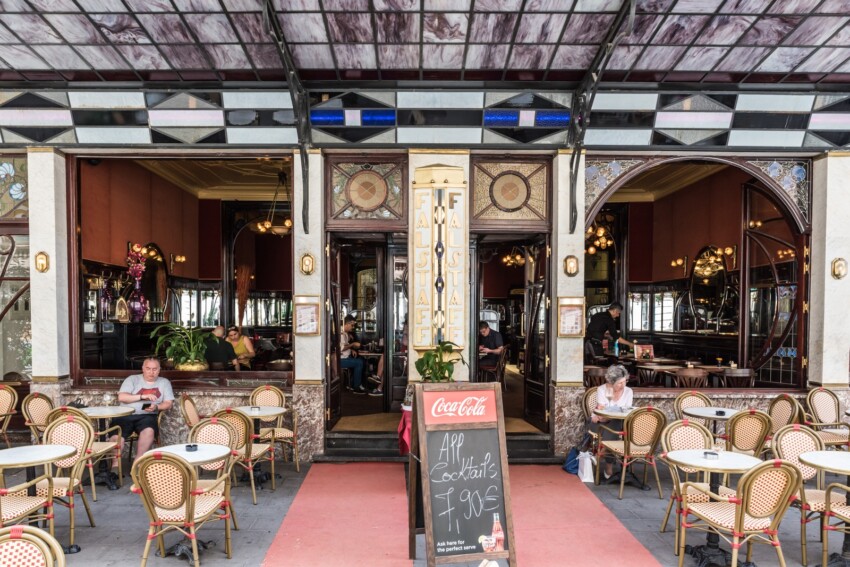
The brasserie is the most representative gastronomic format of Belgian culinary culture: a venue that is a hybrid between a restaurant and a beer hall, informal yet carefully run, where you eat moules-frites, stoofvlees, waterzooi and other classics of local cuisine in a convivial and unpretentious atmosphere. The historic brasseries of Brussels — such as Maison Antoine for chips or les Armes de Bruxelles in the Galerie des Princes — are institutions frequented by tourists and locals with the same loyalty for decades.
For those willing to spend more, Belgium offers a high-level gastronomic scene with numerous Michelin-starred restaurants, particularly in Brussels and Flanders. Contemporary Belgian cuisine has managed to reinterpret classics in a modern key without distorting them, and several Belgian chefs are considered among Europe’s most creative. Those visiting Ghent will also find a vibrant vegetarian and vegan food scene: the city is considered the European capital of vegetarianism and hosts an extraordinary number of quality plant-based restaurants.
 Hotel
Hotel  Budget accommodations
  Apartments
  Family Hotel
  Luxury Hotel