Hotel Melba
Bastogne - Avenue Mathieu, 49-51
Book now
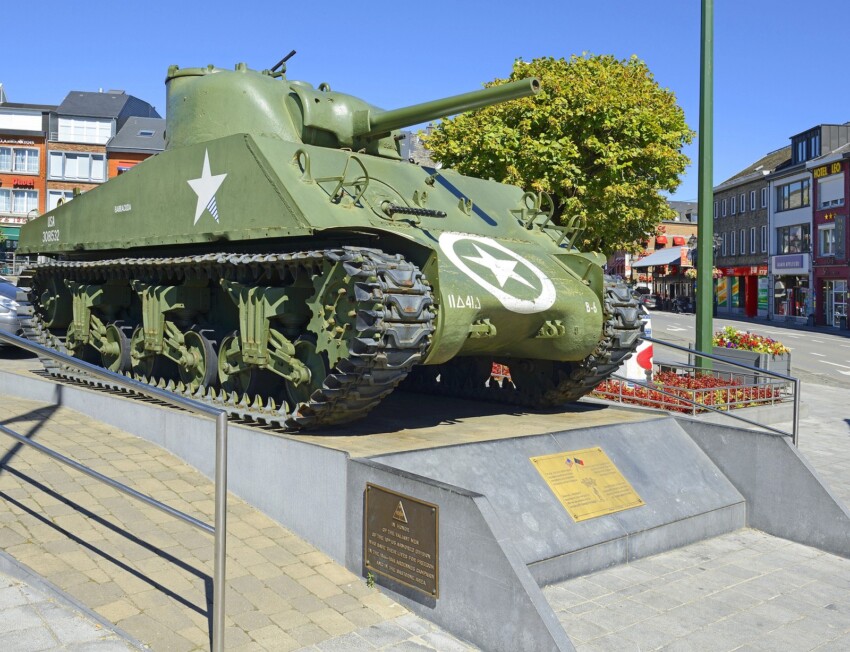
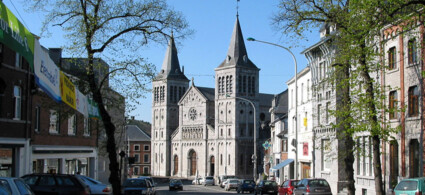
The essence of Bastogne in a single image? The main square in the town centre with cafés and a tank: an image that captures the vibrancy and serenity of the present alongside the tragic event that forever marked this small Ardennes town.
For centuries an important passage between France, Germany and Luxembourg, Bastogne would very probably have remained unknown to tourists had it not been shaken in 1944 by an event crucial to European and world history: the brutal Battle of the Bulge.
The other event to which Bastogne owes its fame is, fortunately, entirely free of tragedy – instead, it’s one of the most eagerly anticipated sporting events for cycling enthusiasts: the legendary race Liège–Bastogne–Liège, one of the world’s oldest cycling races.
Tourism in Bastogne revolves around history and cycling, with an extensive list of museums and commemorative monuments on one hand and numerous cycle routes crossing the undulating countryside just beyond the historic centre on the other.
You can follow the crowds and choose a themed break (history or bikes), or mix different elements for a trip where you alternate emotional moments, relaxing hours in nature, walks through an attractive town centre and perhaps even a visit to a renowned brewery.
Bastogne is also perfect for a family holiday: all the history museums have activities and exhibitions designed with children in mind, and after exploring history, you can enjoy hours outdoors wandering through woods, valleys and meadows in the surrounding area.
Why is the battle that made the small town of Bastogne world-famous so important? Was it truly a decisive battle in determining the outcome of the Second World War?
Yes. Beginning on 15 December 1944, the Battle of the Bulge represented the last major armed offensive launched by Nazi Germany. The aim of the offensive was to halt the Allied advance that had begun with the D-Day landings in Normandy, by cutting through Belgium to reach the sea and block Allied supply lines.
The attack caught the Americans stationed in Bastogne by surprise: the area was not considered strategically important and troop numbers were minimal at the time. Through heroic defence, the few Americans in the area (numbering roughly one-fifth of the German forces) managed to resist the German advance and buy time for the American army to send necessary reinforcements.
On 22 December 1944, the Germans demanded the Americans’ surrender, their forces worn to exhaustion. The reply of American General McAuliffe went down in history: Nuts! Five days later, it was the Germans who retreated.
It appears the Nuts Fair, held annually in Bastogne and concluding with nuts being thrown from the town hall balcony, does not owe its existence to this historic refusal. The tradition appears to be far more ancient, considerably predating the Battle of the Bulge.
Two main categories of tourists want to visit Bastogne: those passionate about history and those passionate about cycling. However, the town also offers other attractions and suits various types of holiday.
Walking around Bastogne, it’s impossible not to come across a statue, a street name or something even more obvious reminding you of the events of the Battle of the Bulge – for example, a tank.
The Sherman Tank permanently parked in the town’s main square is one of the few tanks that remained intact during the conflict. The square is named after General McAuliffe, who commanded the American forces; a bust of him is also located in a corner of the square.
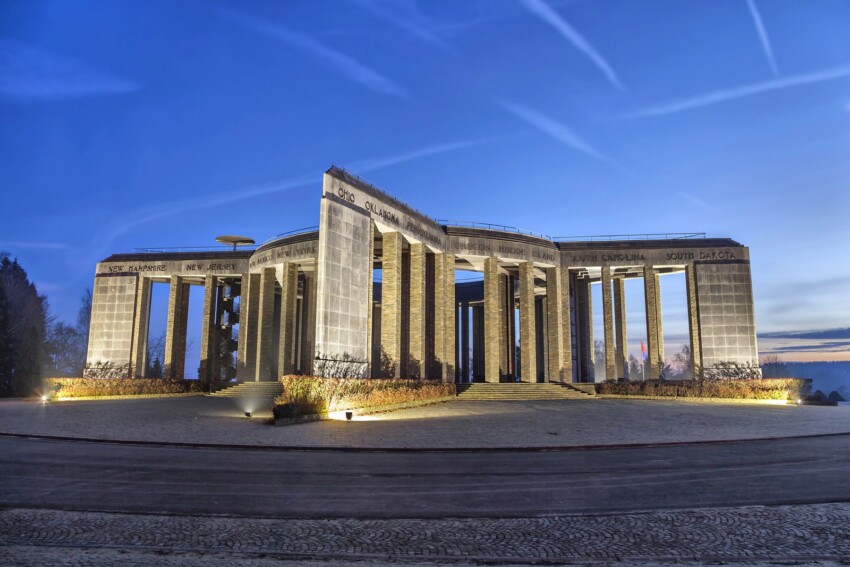
The most moving place of remembrance in Bastogne is probably the Mardasson Memorial, situated just outside the centre on the road leading to Clevanceau. It’s a massive commemorative monument dedicated to Americans who died, went missing or were wounded during the Battle of the Bulge (approximately 77,000 people). Grey and solemn, it’s a place that inspires silence and respect.
Inaugurated on 16 July 1950, the Mardasson Memorial is a sort of open-air gallery consisting of a colonnade in the shape of a five-pointed star; the names of all soldiers who died or were wounded are carved on the sides of the stars, each measuring 31 metres wide. At the centre of the monument lies a commemorative plaque placed there in 1946 on the anniversary of American Independence Day.
A spiral staircase leads to the top of the monument, from where you can see a wide surrounding area encompassing all the key battle locations.
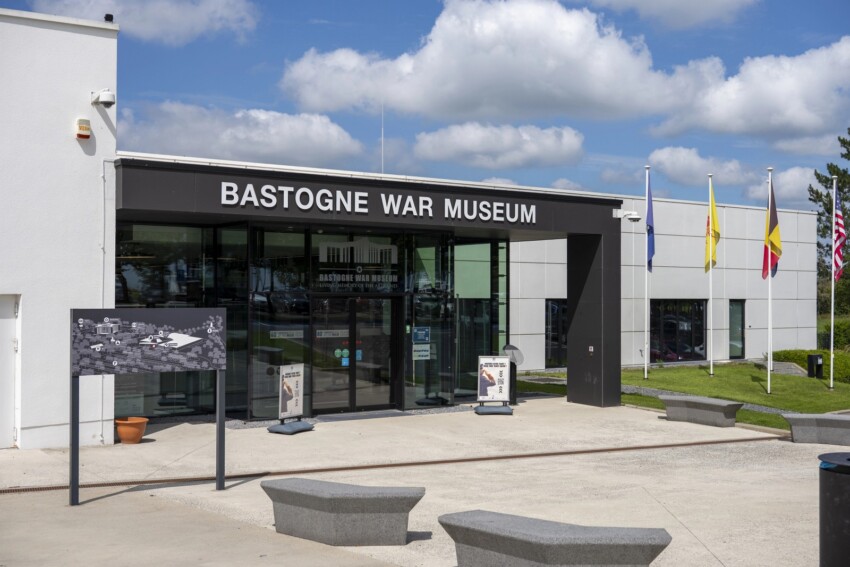
Next to the memorial stands the Bastogne War Museum, not to be missed if you want to deepen your knowledge of the historical events: it’s one of Belgium’s most important museums dedicated to the Second World War and includes both historical documents and period artefacts as well as interactive installations and film footage.
The audio guide narrates the historical events through the voices of four characters representing four different perspectives on the conflict: a German soldier, an American soldier, a Belgian boy and a young Belgian teacher.
More intimate and meditative is a visit to the Peace Wood, a green space where 4,000 trees were planted in 1994 to commemorate the 50th anniversary of the battle. Each tree is dedicated to a victim of the battle, civilian or military.
If you’d rather not leave the town centre, you can visit the 101st Airborne Museum, whose entrance is just 350 metres from the Sherman Tank. It’s housed in a building constructed in 1936, formerly used by officers of the Belgian army and later by the Red Cross.
With its hyperrealistic mannequins, period photographs and dramatic sound effects, the museum will give you an idea of life in Bastogne during the harrowing days of the offensive.
The main places of remembrance are connected by the RAVel cycle route, which follows the path of a former railway for approximately 21 km.
Bastogne is one of the preferred destinations for those wanting to combine poignant visits to places of remembrance with another typically Belgian attraction: beer. Just 20 minutes’ drive from Bastogne, in the village of Wibrin, you’ll find the famous Belgian brewery of the gnome with the red hat: the d’Achouffe brewery, producer of La Chouffe beer.
Open since 1982, the brewery organises guided tours lasting an hour and a half, available in English, French and Dutch. Tour times vary depending on the season; you can book online.
If you’d prefer to try a local beer, look in Bastogne’s beer shops and bars for Trouffette, a beer produced by the Brasserie de Bastogne.
Historical attractions in Bastogne not linked to the Second World War include a Romanesque church with splendid medieval baptismal fonts (open by appointment) and the Porte de Trèves, the only remaining intact gate from the town’s defensive walls (built in the 14th century).
Need some lightheartedness after visiting the places of remembrance, which while interesting are emotionally demanding? Take a look at the curious Museum en Piconrue, dedicated to life in the Ardennes between 1850 and 1950.
The museum devotes considerable space to folklore and legends; here you can learn about the ancient piche-cacaye brotherhood. Its genuine historical existence is questionable, but for locals it’s a good excuse to celebrate, wear traditional costumes and bizarre masks.
Bastogne is a small but much-visited town: places of remembrance attract large numbers of tourists, both domestic and international, throughout the year. It’s therefore advisable to book your hotel in advance.
The choice of accommodation is quite varied, with options in all price ranges: from simple bed and breakfasts to 4-star hotels run by international chains. Prices for Bastogne hotels are in line with Belgian averages, which unfortunately doesn’t mean budget-friendly: if you’re travelling on a tight budget, try to book as early as possible to find a good deal.
If you have a car, you can take advantage of it by booking a lovely holiday home in the countryside outside the town centre.
Although it’s far from the main cities of Flanders and Wallonia, Bastogne is an easy town to reach if you’re travelling by car: it lies on the main route connecting Brussels and Luxembourg.
Reaching Bastogne by public transport, however, is not straightforward.
The town has no railway station; the nearest one is in Libramont, a town about 20 km away. Bastogne and Libramont are connected by a direct bus, but services are infrequent. Public transport within the town is also not very efficient: it’s better to get around by car or bike.
The nearest international airport to Bastogne is Findel in Luxembourg (55 km away); other nearby airports are Liège in Belgium and Spangdahlem in Germany.
What's the weather at Bastogne? Below are the temperatures and the weather forecast at Bastogne for the next few days.
 Hotel
Hotel  Budget accommodations
  Apartments
  Family Hotel
  Luxury Hotel