Bestseller
From Brussels: Luxembourg Tour with Dinant Visit
From 56,28 €
Buy the ticket
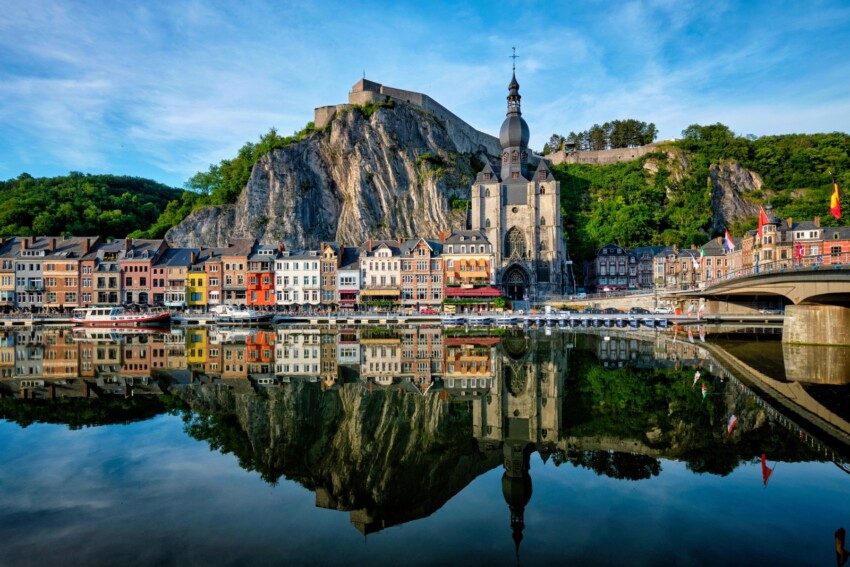
Nestled on the banks of the River Meuse at the foot of imposing hills that rise almost vertically, the city of Dinant is as a whole a breathtaking and stunning sight. It’s an unusual city not only for the natural setting in which it’s situated but also for the attractions it offers.
Dinant’s tourist fame is linked to Adolphe Sax, inventor of the saxophone, and to Leffe beer, one of the abbey beers most famous around the world.
The former is remembered by gigantic saxophones scattered throughout the city, an interactive museum and a couple of bronze statues; beer enthusiasts will be able to visit the Leffe brand museum in an ancient monastery and taste all the types of Leffe that are produced today.
But there are plenty of other good reasons to visit Dinant: for example, a trip on the river by boat or kayak, a visit to natural caves located just outside the city centre, a rock outcrop that seems to have deliberately separated itself from the mountain, elegant Renaissance palaces, opportunities for trekking and other outdoor sports in the surrounding area.
Dinant is the ideal destination for a day trip from Brussels as well as the perfect destination for those who want to discover Belgium away from the usual tourist routes.
The municipal territory of Dinant is enormous, but the historic centre is small and can be easily explored on foot.
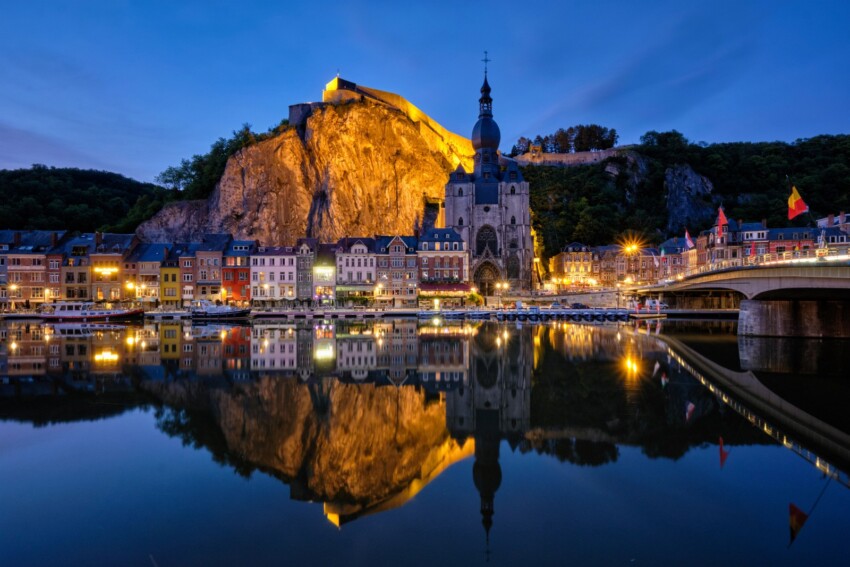
The best vantage point in Dinant, as well as one of the most famous attractions, is undoubtedly the Citadel perched on top of the hill that dominates the city.
It is a magnificent defensive construction dating from the sixteenth century, though its current appearance dates from the early nineteenth century: viewed from the outside it is stark and unremarkable, but the panorama that will unfold before your eyes is truly spectacular.
You can reach the hilltop by climbing 408 steep steps or more comfortably by cable car. The ticket is a bit pricey but also includes admission to the Citadel; free guided tours of around an hour are available.
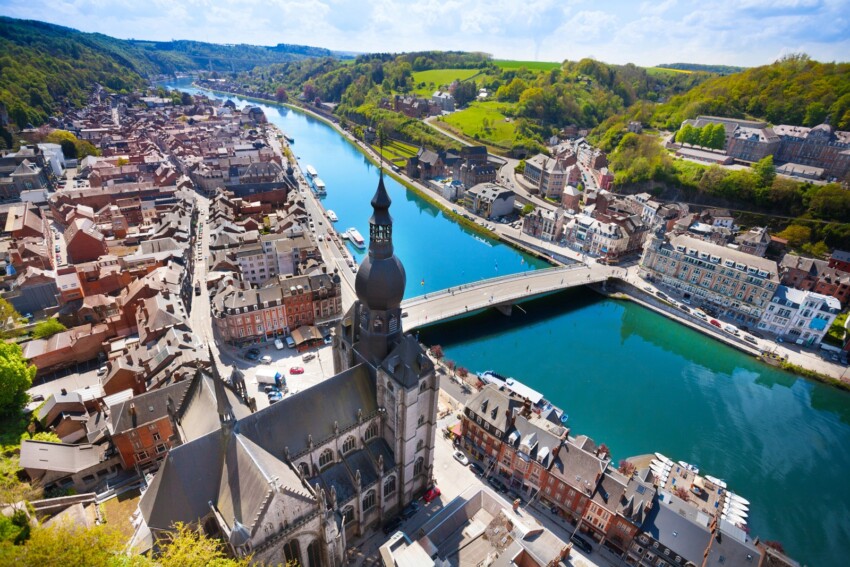
Dinant too has its Notre Dame, which has become a symbol of the city: it is a wonderful fourteenth-century church in the Gothic style to which a characteristic onion dome bell tower was added in the sixteenth century. It stands right at the foot of the hill on which the Citadel was built, so that the two almost seem like one.
The Church of Notre Dame was built on the site of an earlier church, destroyed by a rock collapse in 1227. Of the original church, only a Romanesque portico remains, which is found on the right side when facing the main façade.
Once inside, look up to admire the magnificent decorated stained glass, one of the largest in all of Europe.
The most celebrated citizen of Dinant is Adolphe Sax, the inventor of the musical instrument that bears his name. Although he lived here for only a year, the city never misses an opportunity to remind tourists of its connection to the brilliant musician and inventor.
Gigantic statues depicting colourful saxophones are scattered throughout the historic centre, a distinctive feature that has made Dinant famous.
One of the places where you’ll find the greatest concentration of saxophones is the city’s most important bridge, dedicated to the French Republic President Charles de Gaulle, who was wounded in battle here during the First World War. The bridge was inaugurated exactly a hundred years after this episode: a rather unusual way to honour the memory of a person.
Each of the saxophones that decorate the de Gaulle bridge represents a member state of the European Union: as you cross the bridge you can say you’ve taken a cheerful and colourful stroll across Europe!
To learn about the life of Adolphe Sax you can visit the Maison de Monsieur Sax, a study centre dedicated to him housed in the original family home. You’ll discover Adolphe Sax’s brilliant insights, challenges, triumphs and failures, and the secrets of the saxophone, one of the most refined musical instruments.
Outside the museum there is a bronze statue of Adolphe Sax sitting on a bench holding a saxophone: he seems almost posed for a photograph, so don’t be afraid to sit next to him and take a selfie. Another statue is located in the entrance hall of the town hall.
Dinant is known to beer enthusiasts as the city of Leffe, one of the most famous abbey beers in the world. Today it is a brand owned by the ABInBev conglomerate and its production has been moved to an industrial plant in Leuven, but Leffe originated as a traditional beer produced by monks inside a monastery in the area. Its origins date back as far as 1240.
To learn about the history of this brewing legend, visit the Maison Leffe museum, housed in La Merveilleuse, a luxury hotel created from a former monastery. You’ll discover the production process, the various styles of Leffe beer that are produced and the principles governing food-beer pairings.
The museum is interactive and can be visited without participating in a guided tour; the visit concludes with a tasting.
Leffe beer is sometimes marketed as Trappist beer, but it is not: to be defined as such, a beer must be produced inside a monastery belonging to the Trappist order. Trappist beers can be recognised by the appropriate certification mark.
Leffe beer can instead be defined as an abbey beer.
If you are a music lover you cannot be satisfied with just Adolphe Sax’s museum: add to your Dinant to-do list the Maison de la Pataphonie. Inside an elegant sixteenth-century house expertly restored, you can experience a truly unique interactive experience and enjoy playing musical instruments made from everyday objects.
A truly unique attraction in Dinant is the La Merveilleuse cave, a natural wonder that you wouldn’t expect to find in a city centre. Yet it’s right here: three kilometres of natural galleries carved in the rock whose entrance is just a 10-minute walk from Dinant’s historic centre.
Discovered in 1904, these galleries are considered among the most beautiful caves in Belgium. The name “La Merveilleuse cave” is not in the least exaggerated.
It’s worth venturing a little way out of Dinant’s centre to visit the attractions in the surrounding area. The most impressive is also the closest. It is Rocher Bayard, a bizarre rock outcrop measuring 40 metres high: looking at it, you get the impression that this piece of mountain deliberately decided to separate itself from the mountain, walk a few metres and reposition itself on the ground.
The displacement was of course created by man: between the mountain and Bayard rock there was a small passage that was opened by the soldiers of Louis XIV during an attempt to occupy the city. Today a road open to cars runs between the mountain and the rock. A short stretch that you won’t want to spend much time on!
Another unmissable attraction in the area around Dinant is Freyr Castle in Hastiere, a town just 15 km away. Built as a summer residence for the Dukes of Beaufort-Spontin, it is an elegant Renaissance-style palace, famous for its refined gardens designed by the architect Le Nôtre, who also designed the gardens of Versailles.
Finally, we highlight another must-see stop for beer lovers, the Caracole Brewery in the village of Falmignoul: a craft brewery founded in the eighteenth century that is particularly fascinating, where beer is still brewed in copper vats heated by a wood-fired oven.
It is possible to participate in a guided tour with tasting, purchase beers to take away or stop for lunch in the characteristic tavern. Opening days and times vary depending on the season, so check before you arrive.
Although many tourists visit it on a day trip, the supply of hotels in Dinant is very good, with options suitable for all types of holiday and all budgets. For something modern and comfortable, opt for a hotel from an international chain, a business hotel or an apartment.
With plenty of charming accommodation, Dinant is also perfect for a romantic getaway: choose from beautifully decorated bed and breakfasts, guesthouses with names inspired by jazz and French cinema, boutique hotels with stone walls or rooms with river views.
A wonderful hotel… or rather marvellous!
If you want to treat yourself to a special stay, book one or more nights at the Hotel La Merveilleuse by Infiniti Resorts, a luxury spa hotel created from an ancient convent less than two kilometres from the centre with beautiful panoramic views over the city.
The main tourist attractions can be reached on foot, while for the Maison Leffe you won’t even need to leave the hotel. The restaurant, created from a garden now covered by a glass roof, also offers dishes cooked with beer.
Getting to Dinant is very straightforward, whether by car or by public transport. The city is connected by direct trains to Brussels and the journey takes less than two hours. If you’re driving, it will take you just an hour to reach Dinant from Brussels; just outside the centre you’ll find a few free car parks.
What's the weather at Dinant? Below are the temperatures and the weather forecast at Dinant for the next few days.
 Hotel
Hotel  Budget accommodations
 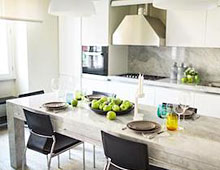 Apartments
 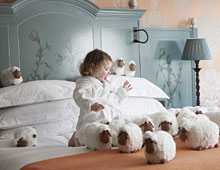 Family Hotel
 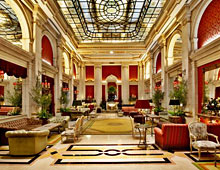 Luxury Hotel